There is no decided method for storing basil. People swear by different methods, so we’ve provided two options, both of which have proven results.
Andy Lyons/Meredith
How to Store Basil In a Bouquet
As with many fresh herbs, it’s helpful to think of them as cut flowers. Any leafy herb with a soft stem, including basil, can be stored as you would a bouquet of flowers — in water. Here’s how:
Trim the stems, removing the last inch or so. Place basil in a jar filled with a few inches of water.
Loosely cover the tops of the basil with a plastic bag (unfortunately, your basil bouquet won’t make a beautiful centerpiece). A thin, produce bag works great for this.
Leave the basil bouquet out at room temperature, replacing the water every few days. Whatever you do, don’t refrigerate it. Exposed basil doesn’t do well in the cold. Once you’re ready to enjoy, wash and dry the leaves.
Fresh basil will last one to two weeks when stored this way.
How to Store Basil In a Plastic Bag
Another popular method for storing basil is the plastic bag method (it sounds far less exciting than “basil bouquet,” I know). If you prefer to keep your basil stored in the fridge like salad greens, this method protects it from the harsh elements.
Go ahead and remove the leaves from the stems. Wash and dry the leaves, using either a paper towel or a salad spinner.
Wrap the basil leaves in a dry paper towel and place inside a plastic bag. Seal and store for one to two weeks.
Carson Downing/Meredith
How to Preserve Basil
If you don’t plan to use your basil within one to two weeks, there are two methods for long term preservation: freezing and drying.
How to Freeze Basil
Because basil isn’t as hardy as herbs like rosemary or mint, it does best when frozen as a paste. Here’s how:
Rinse the herbs. Then blanch them by dipping them in a pot of boiling water for about 10 seconds (using tongs is the best way to do this). Then shock them by immediately plunging them into a bowl of ice water.
Dry with a paper towel or salad spinner. Remove the stems.
Add to a food processor along with just enough olive oil to create a sort of pesto-like paste. Freeze in an ice tray for individually-portioned servings.
To use frozen basil, add it to hot dishes straight from frozen, or thaw and drain before adding to cold dishes. Frozen basil will last for up to three months.
How to Dry Basil
You never know how long store-bought dried basil has been sitting on the shelf, so drying your own is going to be the fresher (and cheaper) option. Here’s how:
Wash and thoroughly dry the basil. Remove the stems.
Set your oven to 200 degrees F, or the lowest temperature. Add the basil to a parchment-lined baking sheet on the upper rack of the oven. Bake for two to four hours, or until dry and crumbly.
Allow the basil to cool completely, crumble, and store in an airtight container for up to a year.
As with all dried herbs, the ratio is about one teaspoon dried for one tablespoon fresh.
First, determine the cook time for the pasta you are using. See the notes below to determine the right time.
Combine pasta, water, and salt in the bowl of an Instant Pot. Give everything a stir. (See note below if cooking long, straight pasta like spaghetti, fettuccini, or linguini.)
Close and lock the lid.
Set the vent to “Sealing”.
Pressure cook on high for the time determined in Step #1.
Leave the pasta on natural release for exactly 5 minutes. (Note: Be very careful not to let it sit for any longer or the pasta will overcook.)
Use manual release to release any remaining pressure. (Note: Hot and starchy pasta water may spray out of the pressure valve when you release it. Cover the valve with a dish towel as it releases to keep this contained and minimize the mess.)
Open the lid and give the pasta a good stir, 20 to 30 times. (This will get rid of any dry spots that remained where the pasta was sticking out of the water during cooking. If adding sauce, stir it in at this point.)
Return the lid to the top of the pressure cooker (no need to lock it just set it on top) and leave the pasta for 5-10 minutes more. (Note: This step is the most important because the pasta will continue to absorb any remaining liquid and continue to cook just a bit in the residual heat of the machine. This is the key to pasta that is cooked, but not overcooked.)
Serve!
Notes
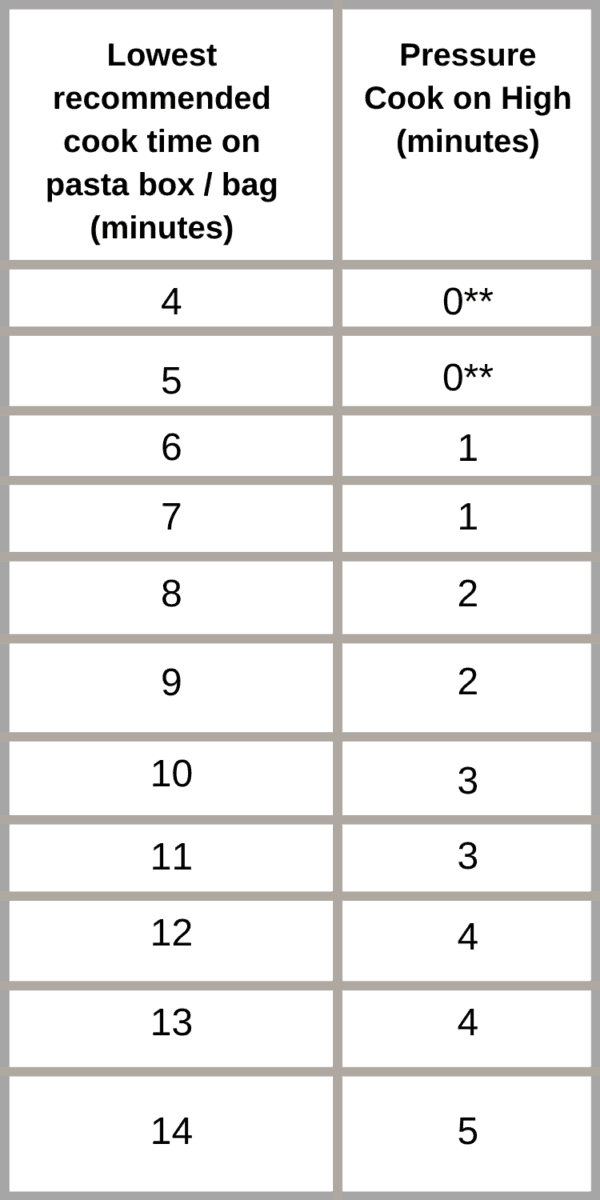
Find the lowest recommended cook time on the pasta box or bag. (If a range is given, use the lowest number in the range. So if the range is 9 to 11 minutes, use 10 minutes. If only one time is given and it’s odd, round down. So 7 minutes becomes 6.) Then use this chart to determine how long to pressure cook on high.
**0 is a real setting on the pressure cooker / instant pot. For small pasta shapes with a short recommended cook time, set the timer to zero minutes. The pressure cooker will fully pressurize but won’t hold for any amount of time.
Spaghetti, Fettuccini, or Linguini – Long straight pasta shapes like these (and angel hair, bucatini, etc.) need to be treated a bit differently than other pasta shapes.
Break the pasta strands in half before adding them to the Instant Pot so that they can easily be submerged in water.
Pour enough water into the Instant Pot to completely cover the pasta (note: there is no set amount, but only add water until every strand of pasta is submerged). Add salt.
Do not stir before cooking. (This will help prevent the pasta from sticking.)
Pressure cook pasta according to the time on the chart.
Leave pasta on natural release for 5 minutes and then release any remaining pressure.
After cooking, stir the pasta well to loosen any strands that are stuck together.
Located near Bishop Arts, Kessler Baking Studio offers scratch made cookies and brownies, including their signature Texas pecan shortbread cookie, which is shaped like Texas!
Smokey John’s has been making traditional hickory-smoked Southern BBQ for more than 40 years. The BBQ joint even won third place in H-E-B’s Quest for Texas Best competition.
Belzoni’s is a small restaurant in the White Settlement in Fort Worth. The restaurant serves fried catfish with sides like greens, hushpuppies, green beans and mac and cheese.
With locations around DFW, Cookie Society offers large cookies on a menu that rotates monthly. The bakery’s claim to fame was a shoutout from Oprah Winfrey.
There are many different types of meat, and they can be surprisingly different in their nutritional properties.
Generally speaking, meat offers an excellent source of protein and provides a good range of essential nutrients. In this regard, it tends to be a better source of B vitamins than most other types of food.
This article reviews the nutritional profile and potential pros and cons of thirteen common varieties of meat.
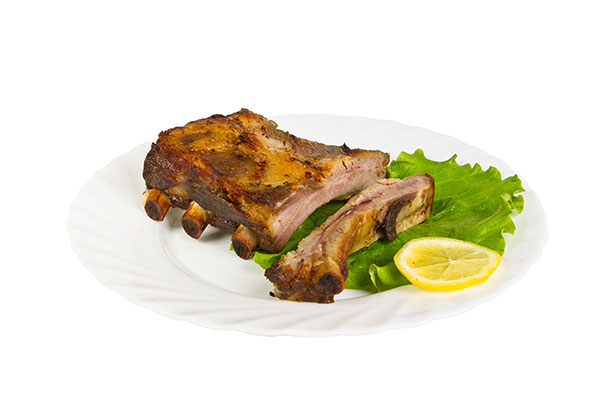
1. Pork
Pork is one of the most popular forms of meat in the world.
Despite some confusion on the issue, pork is classed as red meat rather than white. This is because it contains a large amount of myoglobin, a protein responsible for the red color of meat.
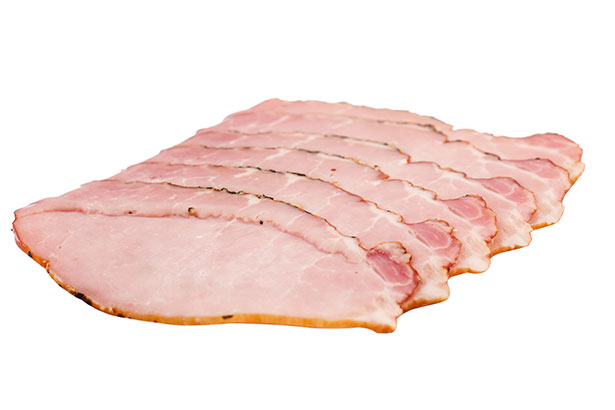
In fact, there are so many different cuts of pork, and a variety of meat products use it such as;
Based on data provided by the USDA FoodCentral Database, here is the typical nutritional profile for ground pork meat per 100g (1).
(Note: Different cuts of meat will vary in their nutrient content, but this provides a general idea of each meat, and the cuts are as close a match as possible.)
Nutrient
Amount
Calories
263 kcal
Carbohydrate
0 g
Protein
16.9 g
Fat
21 g
– Saturated
7.9 g
– Monounsaturated
9.4 g
– Polyunsaturated
1.9 g
– Omega-3
70 mg
– Omega-6
1670 mg
Omega 6 to 3 Ratio
23.8 : 1
Vitamin A
0
Vitamin C
1% DV
Vitamin D
–
Vitamin E
–
Vitamin K
–
Thiamin
49% DV
Riboflavin
14% DV
Niacin
22% DV
Vitamin B6
19% DV
Folate
1% DV
Vitamin B12
12% DV
Pantothenic Acid
7% DV
Calcium
1% DV
Iron
5% DV
Magnesium
5% DV
Phosphorus
18% DV
Potassium
8% DV
Sodium
2% DV
Zinc
15% DV
Copper
2% DV
Manganese
1% DV
Selenium
35% DV
It is worth noting that the nutritional characteristics of pork can vary from one cut to another. To see the nutritional data for every popular pork cut, you can find them all in this guide:
Pork is a particularly significant source of thiamin (vitamin B1). The content of this important vitamin is much higher than in other meat and plays an essential role in glucose metabolism and protecting cardiac health (2, 3).
Much cheaper than most other meats.
Pork contains decent amounts of selenium and zinc, which are responsible for boosting the immune system, defending against oxidative stress, and optimal hormone production (4, 5).
Concerns
Pork is more susceptible to bacterial contamination and food-borne illnesses than other meat; ensuring pork is thoroughly cooked is essential (6, 7).
2. Beef
When most people think of red meat, they probably imagine beef.
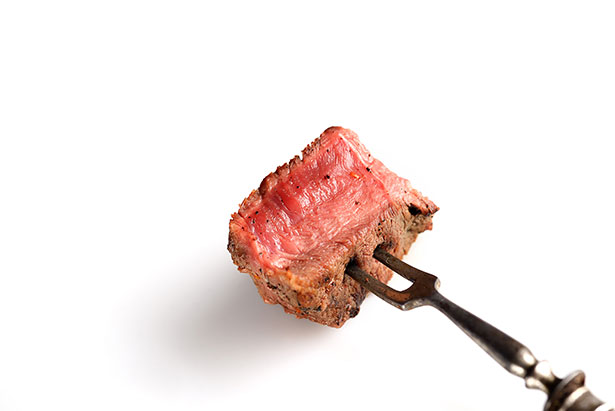
There are many different beef products and cuts of beef, ranging from hamburgers to ribeye steaks.
Nutrition Facts
Here are the nutrient values for ground beef per 100 grams (8).
Nutrient
Amount
Calories
254 kcal
Carbohydrate
0 g
Protein
17.2 g
Fat
20 g
– Saturated
7.7 g
– Monounsaturated
8.8 g
– Polyunsaturated
0.5 g
– Omega-3
48 mg
– Omega-6
435 mg
Omega 6 to 3 Ratio
9 : 1
Vitamin A
0% DV
Vitamin C
0% DV
Vitamin D
–
Vitamin E
2%
Vitamin K
2%
Thiamin
3% DV
Riboflavin
9% DV
Niacin
21% DV
Vitamin B6
16% DV
Folate
2% DV
Vitamin B12
36% DV
Pantothenic Acid
5% DV
Calcium
2% DV
Iron
11% DV
Magnesium
4% DV
Phosphorus
16% DV
Potassium
8% DV
Sodium
3% DV
Zinc
28% DV
Copper
3% DV
Manganese
1% DV
Selenium
21% DV
It is also important to note that the nutritional properties of beef can vary considerably depending on the fat content.
For example, a ribeye steak will be much higher in fat (and calories) than a lean cut of meat.
To gain a better idea of how different cuts of beef compare, see the nutrition facts for every popular cut of beef here:
Beef contributes large amounts of iron, zinc, and vitamin B12 to the average person’s diet (9).
Interestingly, the main fatty acid in beef is none other than oleic acid. If you haven’t heard of it before, then it’s also the main fat in olive oil (and known as “heart healthy”) (10, 11).
Beef contains a wide variety of potentially beneficial compounds that include creatine, conjugated linoleic acid (CLA), and glutathione (12, 13, 14).
Concerns
Excessive beef consumption can increase circulating iron to unhealthy levels in some individuals. These high levels can increase the risk of various cancers and cardiovascular disease. This risk is especially the case in those with a genetic mutation called hemochromatosis, which causes over-absorption of heme iron (15, 16).
Overcooking beef (burning) can lead to the formation of polycyclic aromatic hydrocarbons (PAHs) and heterocyclic amines (HCAs). Both of these compounds are carcinogens, but we can minimize their risks by sensibly cooking meat (17, 18).
Both lamb and mutton are very similar types of meat, with one fundamental difference;
Lamb is from a sheep less than one-year-old
Mutton is the meat of an adult sheep
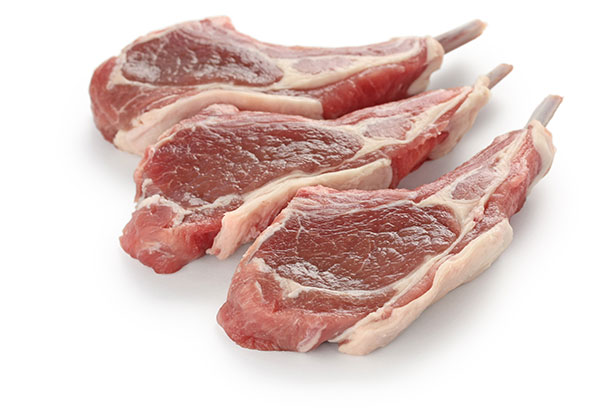
Just like beef and pork, there are a variety of popular lamb cuts — perhaps lamb chops are the most popular.
Nutrition Facts
Per 100g, the nutritional profile of ground lamb meat looks something like this (19);
Nutrient
Amount
Calories
282 kcal
Carbohydrate
0 g
Protein
16.6 g
Fat
23.4 g
– Saturated
10.2 g
– Monounsaturated
9.6 g
– Polyunsaturated
1.9 g
– Omega-3
420 mg
– Omega-6
1360 mg
Omega 6 to 3 Ratio
3.2 : 1
Vitamin A
0% DV
Vitamin C
0% DV
Vitamin D
–
Vitamin E
1% DV
Vitamin K
4% DV
Thiamin
7% DV
Riboflavin
12% DV
Niacin
30% DV
Vitamin B6
6% DV
Folate
5% DV
Vitamin B12
39% DV
Pantothenic Acid
7% DV
Calcium
2% DV
Iron
9% DV
Magnesium
5% DV
Phosphorus
16% DV
Potassium
6% DV
Sodium
2% DV
Zinc
23% DV
Copper
5% DV
Manganese
1% DV
Selenium
27% DV
Benefits
Generally speaking, both lamb and mutton are nutritious meat options.
Because sheep graze on pasture all day, the omega 6 to 3 ratio is very low—and perhaps optimal—compared to other meats (20).
Lamb contains a broad range of health-protective nutrients, especially zinc, selenium and B vitamins.
Concerns
Lamb is very expensive in comparison to other kinds of meat.
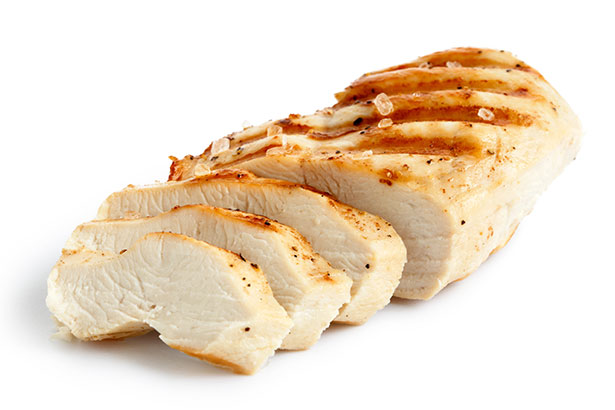
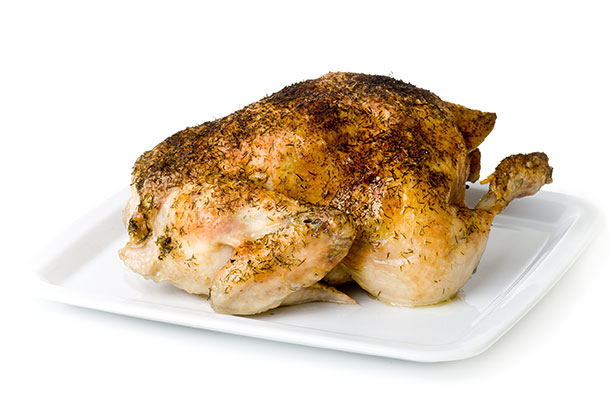
4. Chicken
Alongside beef and pork, chicken is one of the ‘big three’ popularity-wise.
However, chicken is a different classification of meat and comes under the poultry category.
People commonly refer to poultry as ‘white meat’.
As one of the most popular foods in the world, there are all sorts of chicken-based foods. These range from fried and roasted chicken to chicken soup and even chicken popcorn.
Nutrition Facts
Ground chicken meat provides the following nutrients per 100g (21);
Nutrient
Amount
Calories
143 kcal
Carbohydrate
0 g
Protein
17.4 g
Fat
8.1 g
– Saturated
2.3 g
– Monounsaturated
3.6 g
– Polyunsaturated
1.5 g
– Omega-3
96 mg
– Omega-6
1327 mg
Omega 6 to 3 Ratio
13.8 : 1
Vitamin A
0% DV
Vitamin C
0% DV
Vitamin D
–
Vitamin E
1% DV
Vitamin K
1% DV
Thiamin
7% DV
Riboflavin
14% DV
Niacin
22% DV
Vitamin B6
19% DV
Folate
1% DV
Vitamin B12
14% DV
Pantothenic Acid
11% DV
Calcium
1% DV
Iron
5% DV
Magnesium
5% DV
Phosphorus
18% DV
Potassium
15% DV
Sodium
3% DV
Zinc
10% DV
Copper
3% DV
Manganese
1% DV
Selenium
15% DV
Benefits
Chicken is very cheap and affordable.
For those who are trying to consume less fat/calories, chicken offers a smaller amount than other meats but with the same protein content. In other words, chicken is protein-dense.
Chicken stock/broth offers a significant source of gelatin. As chicken bones have a lower density than other meats, the collagen and gelatin are far easier to extract.
Chicken provides a decent source of necessary vitamins and minerals, particularly selenium, potassium, phosphorus and B vitamins.
Concerns
Unfortunately, bacterial contamination with strains such as E. coli and salmonella isn’t rare with chicken. As a result, strict hygiene procedures are necessary when handling raw meat (22, 23).
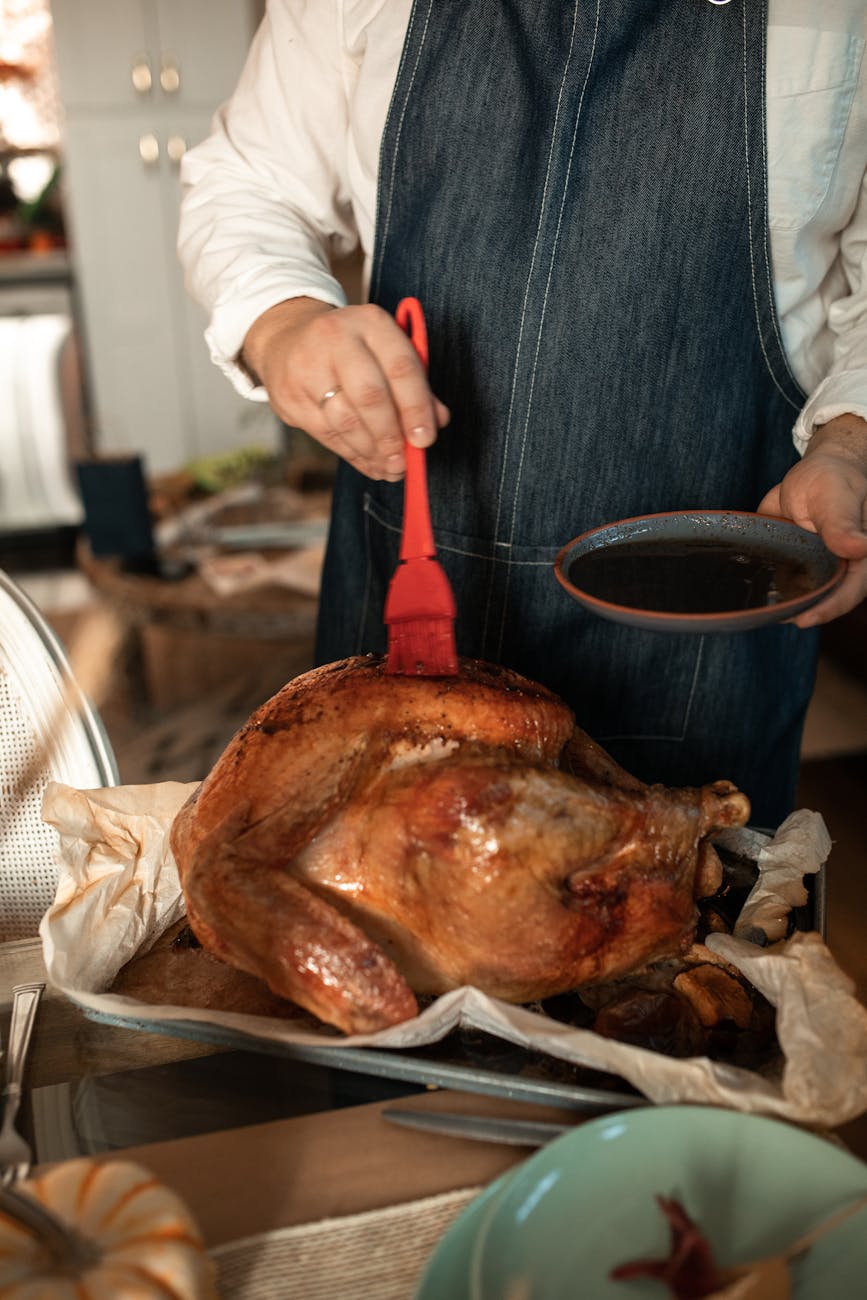
Turkey is another type of white meat, probably best known for its appearance at the Christmas table.
It has both a deeper yet drier taste than chicken and is a less prevalent form of poultry.
As mentioned above, the most popular kind is probably roast turkey, but you can find a variety of processed and unprocessed turkey products. One of the most popular of these is turkey bacon (see here for a full guide to turkey bacon).
Turkey is among the most protein-dense of all meats, offering 17.5 grams of protein for only 149 calories.
Similar to chicken, turkey also provides a significant amount of B vitamins, potassium, selenium and phosphorus.
Turkey provides an inexpensive source of high-quality protein.
Concerns
Similar to other forms of poultry, turkey is more likely to harbor foodborne bacteria than red meat (25).
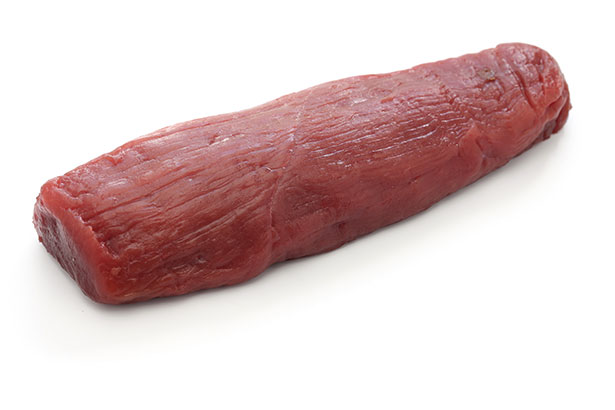
6. Venison
Venison refers to the flesh of a deer, and it is a traditionally rarer type of meat.
In recent years, sales of venison have been soaring as a result of its perceived healthy reputation among consumers.
But is that reputation justified?
Nutrition Facts
Despite being a red meat, venison is very lean. In terms of nutrition, it looks more like white meat.
Here are the nutritional details per 100g of ground venison (26);
Nutrient
Amount
Calories
157 kcal
Carbohydrate
0 g
Protein
21.8 g
Fat
7.1 g
– Saturated
3.4 g
– Monounsaturated
1.3 g
– Polyunsaturated
0.4 g
– Omega-3
104 mg
– Omega-6
225 mg
Omega 6 to 3 Ratio
2 : 1
Vitamin A
0% DV
Vitamin C
0% DV
Vitamin D
–
Vitamin E
2% DV
Vitamin K
1% DV
Thiamin
36% DV
Riboflavin
17% DV
Niacin
28% DV
Vitamin B6
23% DV
Folate
1% DV
Vitamin B12
31% DV
Pantothenic Acid
7% DV
Calcium
1% DV
Iron
16% DV
Magnesium
5% DV
Phosphorus
20% DV
Potassium
9% DV
Sodium
3% DV
Zinc
28% DV
Copper
7% DV
Manganese
1% DV
Selenium
14% DV
Benefits
As deer mostly live and feed in the wild, venison has a much lower fat (and omega-6 to omega-3 ratio) than other meat. The excellent omega 6 to 3 ratio stands at approximately 2:1.
Venison has more vitamins and minerals than beef despite having significantly fewer calories. In short, venison is possibly the most nutrient-dense meat out there.
Concerns
One obstacle could be the price; venison costs a lot. Expect to pay around $30 for one pound of venison steak.
Source is extremely important. In some areas, deer can be infected with chronic wasting disease (CWD). See this full guide to venison meat for more information.
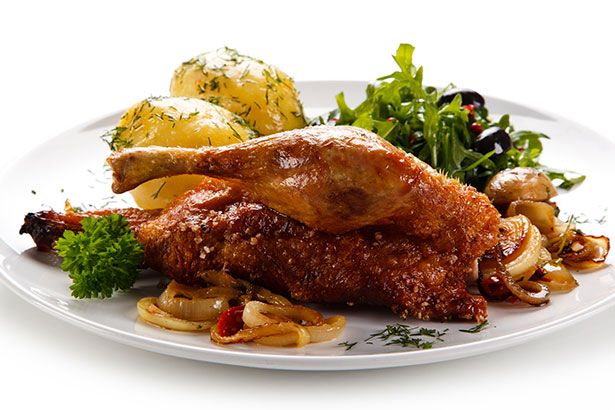
7. Duck
Duck is one of the less popular types of meat.
However, it has immense popularity in Chinese populations, where ‘Peking duck’ is a showpiece dish.
Like chicken and turkey, we can consider duck as a kind of white meat.
Nutrition Facts
Typical duck meat provides the following nutrients (27);
Nutrient
Amount
Calories
132 kcal
Carbohydrate
0 g
Protein
18.3 g
Fat
5.9 g
– Saturated
2.3 g
– Monounsaturated
1.5 g
– Polyunsaturated
0.7 g
– Omega-3
80 mg
– Omega-6
670 mg
Omega 6 to 3 Ratio
8.4 : 1
Vitamin A
2% DV
Vitamin C
10% DV
Vitamin D
–
Vitamin E
4% DV
Vitamin K
3% DV
Thiamin
24% DV
Riboflavin
0.5% DV
Niacin
5.3% DV
Vitamin B6
17% DV
Folate
6% DV
Vitamin B12
7% DV
Pantothenic Acid
16% DV
Calcium
1% DV
Iron
13% DV
Magnesium
5% DV
Phosphorus
20% DV
Potassium
8% DV
Sodium
3% DV
Zinc
13% DV
Copper
13% DV
Manganese
1% DV
Selenium
20% DV
Benefits
Duck provides a significant amount of selenium, phosphorus, and B vitamins. These vitamins are all important for optimal energy production and a well-functioning immune system (28, 29).
Concerns
Making duck at home—or having a roast duck—is perfectly healthy. However, be aware that in Chinese cuisine, duck often comes in sauces made from a variety of additives including sugars and oils.
8. Wild Boar
Wild boar is a non-domesticated pig that lives in the wild.
The meat of this animal is also known as ‘wild boar.’
Generally speaking, wild boar contains a higher proportion of protein and a smaller amount of fat than regular pork.
Nutrition Facts
Wild boar has very different nutritional values from domestic pork, and per 100 g it looks like this (30);
Nutrient
Amount
Calories
160 kcal
Carbohydrate
0 g
Protein
28.3 g
Fat
4.4 g
– Saturated
1.3 g
– Monounsaturated
1.7 g
– Polyunsaturated
0.6 g
– Omega-3
30 mg
– Omega-6
500 mg
Omega 6 to 3 Ratio
16.7 : 1
Vitamin A
0% DV
Vitamin C
0% DV
Vitamin D
–
Vitamin E
–
Vitamin K
2% DV
Thiamin
21% DV
Riboflavin
8% DV
Niacin
21% DV
Vitamin B6
21% DV
Folate
1% DV
Vitamin B12
12% DV
Pantothenic Acid
0% DV
Calcium
2% DV
Iron
6% DV
Magnesium
7% DV
Phosphorus
13% DV
Potassium
11% DV
Sodium
3% DV
Zinc
20% DV
Copper
3% DV
Manganese
0% DV
Selenium
19% DV
Benefits
As it lives and feeds in its natural environment, wild boar contains a higher proportion of omega-3 fatty acids than purely grain-fed pigs.
Wild boar contains an array of health-protective nutrients, in particularly B vitamins, selenium, and zinc.
Concerns
Trichinella spiralis, a parasite sometimes found in pigs, occasionally contaminates wild boar meat. There have been several outbreaks of this in recent years, but it is quite rare (31, 32, 33).
9. Bison
Bison is a type of red meat that is nutritious and very lean.
For this reason, it is an excellent choice of meat for anyone looking to keep their fat or calorie intake a little lower.
Nutrition Facts
Bison is quite nutrient-dense and offers the following nutrition profile per 100 grams (34);
Nutrient
Amount
Calories
146 kcal
Carbohydrate
0 g
Protein
20.2 g
Fat
7.2 g
– Saturated
2.9 g
– Monounsaturated
2.8 g
– Polyunsaturated
0.3 g
– Omega-3
38 mg
– Omega-6
261 mg
Omega 6 to 3 Ratio
6.9 : 1
Vitamin A
0% DV
Vitamin C
0% DV
Vitamin D
–
Vitamin E
1% DV
Vitamin K
1% DV
Thiamin
9% DV
Riboflavin
14% DV
Niacin
27% DV
Vitamin B6
19% DV
Folate
3% DV
Vitamin B12
32% DV
Pantothenic Acid
0% DV
Calcium
1% DV
Iron
15% DV
Magnesium
5% DV
Phosphorus
19% DV
Potassium
9% DV
Sodium
3% DV
Zinc
31% DV
Copper
7% DV
Manganese
0% DV
Selenium
29% DV
Benefits
Although the above data is for conventionally raised animals, grass-fed bison can be very high in omega-3.
Bison offers a wide range of nutrients for very few calories.
Bison is very expensive compared to other types of red meat, making it unaffordable for some people.
10. Goose
Goose is a type of poultry that comes under the ‘white meat’ banner, and it is particularly popular throughout China, Europe, and the Middle East.
Nutrition Facts
Goose meat offers good nutritional value, and it provides the following nutrients per 100 grams (35);
Nutrient
Amount
Calories
161 kcal
Carbohydrate
0 g
Protein
22.8 g
Fat
7.1 g
– Saturated
2.8 g
– Monounsaturated
1.9 g
– Polyunsaturated
0.9 g
– Omega-3
100 mg
– Omega-6
800 mg
Omega 6 to 3 Ratio
8 : 1
Vitamin A
1% DV
Vitamin C
0% DV
Vitamin D
–
Vitamin E
–
Vitamin K
–
Thiamin
9% DV
Riboflavin
22% DV
Niacin
21% DV
Vitamin B6
32% DV
Folate
8% DV
Vitamin B12
8% DV
Pantothenic Acid
20% DV
Calcium
1% DV
Iron
14% DV
Magnesium
6% DV
Phosphorus
31% DV
Potassium
12% DV
Sodium
4% DV
Zinc
16% DV
Copper
15% DV
Manganese
1% DV
Selenium
24% DV
Benefits
Goose meat is a rich source of many nutrients, and it is particularly high in vitamin B6, phosphorus, and selenium.
Similar to other poultry options, goose meat (without skin) is very protein-dense.
Concerns
Depending on location, it can be difficult to find goose meat for sale.
Sometimes wild geese can be susceptible to infections that can be transmittable to humans (by touch). However, this should not be an issue with goose meat bought from a store. Also, like with other poultry, cooking will kill any bacteria present (36).
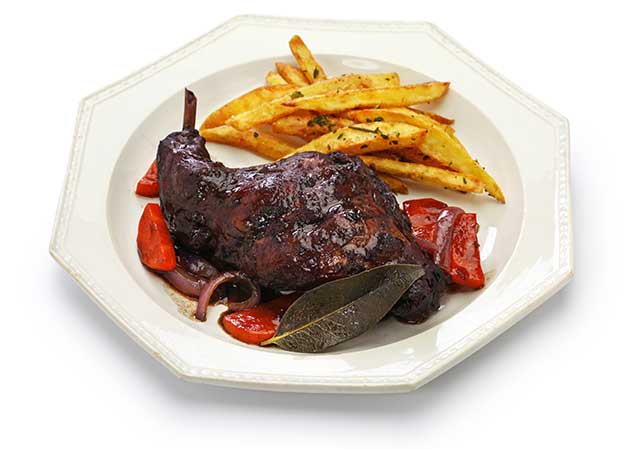
Although the idea of rabbit as food can seem strange, it is a common type of meat in some parts of Europe and the United States (and China).
Rabbit is very popular in France where it is considered to be a delicacy.
Nutrition Facts
Rabbit meat is surprisingly nutrient-dense, and it offers the following nutrition profile per 100 grams (37);
Nutrient
Amount
Calories
136 kcal
Carbohydrate
0 g
Protein
20.0 g
Fat
5.5 g
– Saturated
1.7 g
– Monounsaturated
1.5 g
– Polyunsaturated
1.1 g
– Omega-3
220 mg
– Omega-6
860 mg
Omega 6 to 3 Ratio
3.9 : 1
Vitamin A
0% DV
Vitamin C
0% DV
Vitamin D
–
Vitamin E
–
Vitamin K
–
Thiamin
7% DV
Riboflavin
9% DV
Niacin
36% DV
Vitamin B6
25% DV
Folate
2% DV
Vitamin B12
119% DV
Pantothenic Acid
8% DV
Calcium
1% DV
Iron
9% DV
Magnesium
5% DV
Phosphorus
21% DV
Potassium
9% DV
Sodium
2% DV
Zinc
7% DV
Copper
7% DV
Manganese
1% DV
Selenium
34% DV
Benefits
Rabbit is a substantial source of vitamin B12 and it is also very high in selenium.
Although it is not as high in protein as some kinds of meat, rabbit is very low in fat and calories. As a result, it is very protein-dense; 20 grams of protein per 136 calories.
Rabbit offers one of the better omega-6 to 3 ratios among meat.
Concerns
Wild rabbits are occasionally infected with a pathogen known as tularemia. It is possible for undercooked rabbit meat to transmit this infection (38).
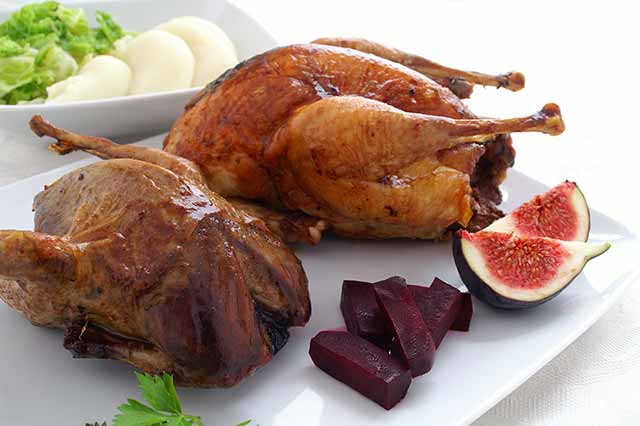
12. Pheasant
Pheasant is thought to be a ‘premium’ meat product thanks to its flavorful taste, and the meat is popular across Europe and the United States.
Nutrition Facts
Pheasant offers an impressive nutrition profile, and it contains the following nutrients per 100 grams (39);
Nutrient
Amount
Calories
181 kcal
Carbohydrate
0 g
Protein
22.7 g
Fat
9.3 g
– Saturated
2.7 g
– Monounsaturated
4.3 g
– Polyunsaturated
1.2 g
– Omega-3
100 mg
– Omega-6
810 mg
Omega 6 to 3 Ratio
8 : 1
Vitamin A
4% DV
Vitamin C
0% DV
Vitamin D
–
Vitamin E
–
Vitamin K
–
Thiamin
5% DV
Riboflavin
8% DV
Niacin
32% DV
Vitamin B6
33% DV
Folate
1% DV
Vitamin B12
13% DV
Pantothenic Acid
9% DV
Calcium
1% DV
Iron
6% DV
Magnesium
5% DV
Phosphorus
21% DV
Potassium
7% DV
Sodium
2% DV
Zinc
6% DV
Copper
3% DV
Manganese
1% DV
Selenium
22% DV
Benefits
Pheasant is an excellent source of B vitamins, and it is particularly high in these nutritions compared to other varieties of poultry.
Pheasant need space and they are usually wild or from ‘free range’ farms where they have access to pasture.
Concerns
There are no specific concerns about pheasant meat. However, like all poultry, it should be cooked fully to minimize the risk of food poisoning.
13. Goat Meat
Goat meat is an extremely popular type of meat in some countries, particularly so in developing countries within Africa and Asia.
However, it is relatively uncommon in other countries, such as the United States.
Goat meat offers the following nutrients per 100 grams (40):
Nutrient
Amount
Calories
143 kcal
Carbohydrate
0 g
Protein
27.1 g
Fat
3.03 g
– Saturated
0.93 g
– Monounsaturated
1.36 g
– Polyunsaturated
0.23 g
– Omega-3
20 mg
– Omega-6
130 mg
Omega 6 to 3 Ratio
6.5 : 1
Vitamin A
0% DV
Vitamin C
0% DV
Vitamin D
0% DV
Vitamin E
2% DV
Vitamin K
1% DV
Thiamin
8% DV
Riboflavin
47% DV
Niacin
25% DV
Vitamin B6
0% DV
Folate
1% DV
Vitamin B12
50% DV
Calcium
1% DV
Iron
21% DV
Magnesium
0% DV
Phosphorus
16% DV
Potassium
9% DV
Sodium
4% DV
Zinc
48% DV
Copper
34% DV
Manganese
2% DV
Selenium
22% DV
Benefits
Goat meat is a rich source of B vitamins and several important minerals.
Goat meat offers good amounts of protein for a low amount of calories.
Concerns
It can be difficult to find goat meat in stores for a reasonable price.
For a complete guide to goat meat and its nutritional properties, see this article:
One of the biggest ‘health trends’ over the past decade is the focus on naturally raised, grass-fed beef and pastured animal products.
Animal welfare is one of the often mentioned reasons for this. However, many people have also taken an interest in the better 6 to 3 ratio of the meat.
The main reason for this seems to be because most of us are consuming excessive amounts of omega-6 in recent times.
For example, the traditional human diet was believed to have a ratio of close to 1:1 omega-6 to omega-3. However, modern-day estimates place this ratio up to a high of 25:1 (41).
For easy reference, here are the approximate omega-6 to 3 ratios for the meats in this article;
Type of Meat
Omega-6 to Omega-3 Ratio
Beef
9 : 1
Chicken
13.8 : 1
Duck
8.4 : 1
Lamb and Mutton
3.2 : 1
Pork
23.8 : 1
Turkey
16.3 : 1
Venison
2 : 1
Wild Boar
16.7 : 1
Bison
6.9 : 1
Goose
8 : 1
Rabbit
3.9 : 1
Pheasant
8 : 1
Goat Meat
6.5 : 1
Please note: to ensure balance, this data is for conventional meats, and you can expect a better ratio for fully grass-fed meat.
The fatty acid ratios of meat will also vary depending on what producers feed the animals.
Which Type of Meat is Healthiest?
To be honest, there is no single meat that is outright ‘healthier’ than another.
There are a variety of factors to consider which include the nutrient profile, taste, and affordability.
However, it is often a good idea to mix and match food choices, which can help to attain a greater range of nutrients.
It is also not essential to eat meat, and many of the nutrients it contains can be obtained elsewhere from seafood or dairy.
Organ Meat
Organ meats are among the most nutrient-dense of all foods.
Although they are not as popular as they once were, foods like beef liver and kidneys are full of essential nutrients.
When you know of someone who thinks like this and do not speak out against such sick thoughts, YOU are silently telling them you agree with their behaviors. An individual cannot, I repeat cannot, change the color of their skin.
It is inhumane to treat them poorly based on something they ABSOLUTELY have no way to change. To not challenge a person and make them THINK about this and point out how SICK they have to be to in order to hate an individual for having a broken nose, no left leg, being white.
Oh….. I did hit a nerve?!? Now, you’re getting it…
If it’s something you, in their shoes, cannot choose to change yourself (race, gender, sexuality, etc), simply be a better human being and STOP judging others! Focus on YOUR OWN SELF. If you hate you, well here’s your wake up call and try to learn to care instead.
Not sure HOW that’s not self incrimination. But here we are, women are moving backwards towards being chattle and waiting for the day people insist to use my birth name over my legal because, “that’s not who you were born as” argument.
WHAT A WORLD we live in. Guess those hippies from the 60-70s feel so much regret about the freedoms they took liberties to have that they decided NO ONE should have any now that they are suddenly faced with their own mortality. Oh how the pendulum swings. Edgar Allen Poe was right about all of humanity in SO MANY scary ways!
A sprawling Dallas suburb is one of the happiest places in the country, according to a new study.
SmartAsset set out to find where Americans are happiest, and the financial technology firm concluded that Plano is the nation’s second-happiest, just behind Arlington, Virginia.
No other Texas cities cracked the top 25. The closest is Fort Worth at No. 38, and Arlington is the 47th happiest place. Dallas is downright morose at the 11th least happy city in the country. Houston is even sadder as the 10th least happy city.
What gives? SmartAsset evaluated cities by 11 variables in personal finance, well being and quality of life. Measures included the marriage rate, average traffic volume, percent of households earning more than $100,000, share of residents below the poverty line, life expectancy and number of residents who report being physically inactive.
“Money can’t always buy happiness,” SmartAsset wrote. “However, quality of life can influence your financial decisions and outcomes.”
Plano scored exceptionally well across the board. More than 52% of its households earn more than $100,000, and only 4.9% live below the poverty line, which is $31,200 for a family of four. In 2022, the median household income in Plano was about $105,000, according to the U.S. Census.
Compare that to Laredo, called the second-least happy city in the country, where only 26% of households earn more than $100,000 and 20% live below the poverty line. The median household income in 2022 was roughly $60,000.
Plano’s life expectancy is 82.2, compared to 78.3 in Dallas. The suburb’s marriage rate is 56%, significantly higher than Dallas’ 39.7%. Roughly 90% of Plano residents have health insurance compared to only 74% in Laredo.
If you’re looking for the happiest state, though, you’ll have to head to California, where three of its cities landed in the top 10.
Posted on https://www.dallasnews.com/news/public-health/2024/04/12/study-plano-the-2nd-happiest-city-in-the-country-while-dallas-checks-in-near-the-bottom/
on 10:18 AM on Apr 12, 2024 CDT
By Sarah Bahari, Staff writer. Sarah Bahari is a trending news reporter. She previously worked as a writer for the Fort Worth Star-Telegram, where she covered a bit of everything. sarah.bahari@dallasnews.com Twitter: sarahbfw
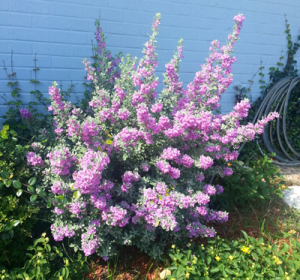
Silver, gray, and green foliage varieties. Very drought tolerant. Requires excellent drainage.
The Texas sage is a fairly slow-growing plant, and may take up to 2 years to become fully established and bloom reliably. Once established, the Texas Sage is extremely drought tolerant, requires very little supplemental water, and will bloom after a good rain storm. (Don’t try to trick it into blooming by watering heavily–it won’t work.) After a week or two, the blooms will fall off, but the silver gray-green leaves stay year round. This plant can eventually grow to around 6 feet tall. The older it gets, the more intensely it blooms. Bees really like this plant when it’s in bloom.
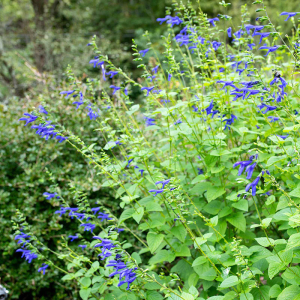
Licorice-scented anise sage has cobalt blue flowers on long spikes that bloom from midsummer to fall. Fantastic for the mid-regions of the border or where easily observed, for hummingbirds have chosen this as their favorite of all the salvias we offer.
WHEN TO SET OUTSIDE
After last frost.
PLACEMENT & CULTIVATION
I can hardly imagine a garden without salvia; the genus has many irreplaceable floral gems. They are easy to grow and trouble-free, many are quick to bloom, and they grow well in gardens or containers. They offer a never-ending parade of flowers—at least until frost—and the antics of visiting hummingbirds. Those pesky deer avoid it, perhaps stayed by the unpleasant aroma of the bruised leaves. Pinch back once plants reach 6″ tall to encourage bushiness and place in a site protected from wind, as salvia branches tend to be brittle. Stake early and deadhead frequently or cut for bouquets.
Final Spacing: 2′
Water Requirements: Medium Water Use
Watering Details: About 1″ per week.
Soil pH: Not particular about pH
Fertilizer: Mix about 4″ of compost into the soil prior to planting. If soil is especially poor, it may be beneficial to feed once a month with an organic water-soluble feed or granular fertilizer.
Diseases & Pests: Prevent powdery mildew by spacing plants apart for increased air circulation. Aphids can be washed off leaves with a strong stream of water or insecticidal soap applications.
When to Cut for Bouquets: Cut when about 1/2 of florets are open.
Uniquely compact hybrid tea—ideal for small gardens
This is the hybrid tea for smaller gardens and patio planters. While most reach about 5–6′ tall, this one stops at about 3′ tall. The flower form follows a growing trend in modern European rose gardens—the ball–shaped bud opens into a less–pointed bloom than the typical high–centered hybrid tea bloom. It’s a little more rounded, and the extra curve is striking. This style is still very new in American gardens. Subtle bicoloring—red on the front of each petal that pales on the reverse—further enhances the rare shape. You’ll be proud of your elegant fresh bouquets. Love at First Sight™ is a modern, improved cultivar, and its much cleaner foliage makes it especially disease-resistant. That includes resistance to black spots—the disease rosarians detest. The blooms also carry a slight perfume and attract beneficial pollinators through summer. Rosa ‘WEKmedatasy’ PPAF
PRODUCT DETAILS
Botanical Name Rosa ‘WEKmedatasy’ PPAF
Flowering Date Late spring to fall
Flower Color Red
Flower Form Petal count of 50.
Foliage Type Dark green.
Form Rose
Growth Rate Moderate once established.
Hardiness Zone 5-9
Height 36 – 42 inches
Planting Instructions Plant at the same level as the soil so the graft of the plant is even with the soil level. Don’t bury the graft. Full sun is best for quicker flowering and higher quality plants.
Pruning Prune to shape. Remove any dead or damaged branches. Self-cleaning petals drop and new buds appear without pruning. Shape plants at any time
Restricted States AE AK GU HI PR
Shipping Season Spring
Ship As #1 BAREROOT
Soil Requirement Well drained, humus enriched soil
Spacing 36 – 48 inches
Spread 36 – 48 inches
Sun Exposure Full Sun, Partial Shade
Watering Requirement Roses prefer a thorough watering but do not like ‘wet feet’. Water early in the day to avoid wet conditions into the night which can cause issues with fungus and disease.
Winter Care Mulch heavily around the base of the plant. Remove promptly in early spring.
:max_bytes(150000):strip_icc()/102328482_preview-2000-3e55a5cf5013436083dc80b79883a93b.jpg)
:max_bytes(150000):strip_icc()/CD_26900_preview-9048c22930db4831bcfebce17e6151ce.jpg)










/cloudfront-us-east-1.images.arcpublishing.com/dmn/YRNVTRYE6JEGRGLBYSWPZEBLTE.JPG)