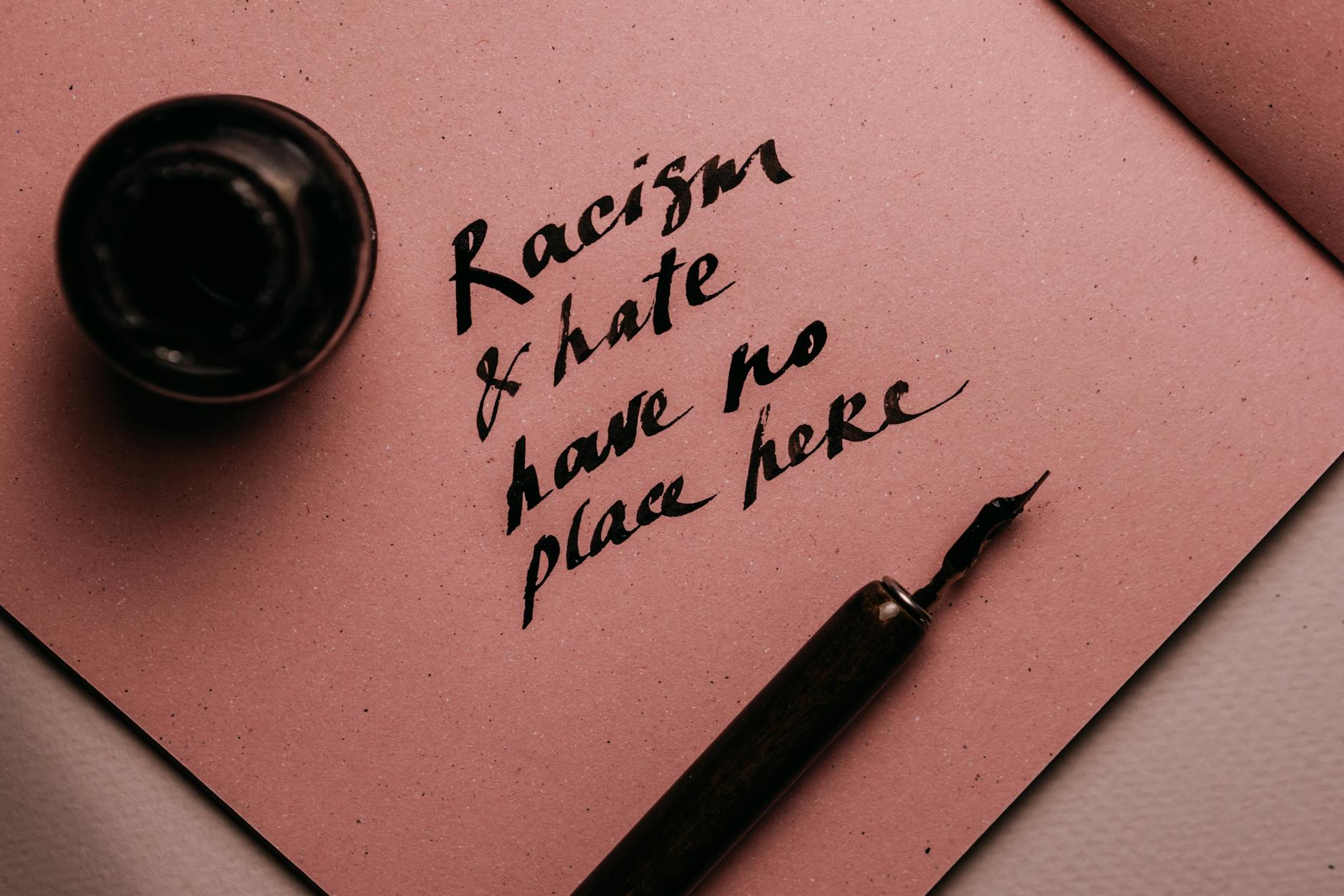
When you know of someone who thinks like this and do not speak out against such sick thoughts, YOU are silently telling them you agree with their behaviors. An individual cannot, I repeat cannot, change the color of their skin.
It is inhumane to treat them poorly based on something they ABSOLUTELY have no way to change. To not challenge a person and make them THINK about this and point out how SICK they have to be to in order to hate an individual for having a broken nose, no left leg, being white.
Oh….. I did hit a nerve?!? Now, you’re getting it…
If it’s something you, in their shoes, cannot choose to change yourself (race, gender, sexuality, etc), simply be a better human being and STOP judging others! Focus on YOUR OWN SELF. If you hate you, well here’s your wake up call and try to learn to care instead.
There’s some third party, using Iceland as a cover for their business which you’ll see in a bit, that is buying out the country out from underneath the American public. I’ve been receiving routine texts/calls since shortly after I bought the house inquiring if I want to sell; see the image below.
Every time, I respond with a canned response that says something to the effect of what is below:
Currently, we are only considering offers of $5 million or higher due to the market, costs to move, and difficulty finding a home in an acceptable distance from our work. The “value” is much lower, however the difference is for the inconvenience fees to move & relocate. I have advised you to not message again 3 times unless you offer the above as it is a violation of the Do Not Call registry. I’m reporting you now.
Yes, this is really what I texted back to them this last time.
Now, as this is the third time and I have warned them and responded to stop according to their note, which they have also not honored, I’m done playing their stupid games.
The next thing to do was to confirm my do not call registry entry for the number that they texted, which the confirmation email says that the number they are texting was registered in September 2020, so that’s good.
(this is which is why getting the correct website information is critical)
Any address, website information you might have
Sometimes you will find this in the “About Us” section of the website
As they are shady, texting, and have a blocker prompt so you can’t talk to someone without saying you want to sell your house and not providing this on the site, that’s where we need to get ingenious:
Many scam companies hide their support email or sometimes even their physical address so this may be a dead end for data collection
Once you have all the information submit it on the fraud reporting site for texting and when you complete it you will get a prompt that looks like this along with an email.
Don’t get me wrong, I don’t mind selling my home to legit buyers who are willing to meet my inconvenience fees of our household having to move. But a group that is so shady that they are making it appear as if they are legal business in the US and refusing to respect our laws. Oh, I will do everything I can to stick it to them.
Loud noise can cause permanent hearing loss. There are ways to protect your hearing. Audiologists can help.
About Noise-Induced Hearing Loss
Noise-Induced Hearing Loss, or NIHL, happens when you listen to loud sounds. These sounds can last a long time, like listening to a concert, or they can be short, like from gunfire. Three factors put you at risk for NIHL:
How loud the noise is
How close you are to the noise
How long you hear the noise
Sound-level meters measure noise levels. We record noise levels in decibels, or dBA. The higher the noise level, the louder the noise. You can listen to sounds at 70 dBA or lower for as long as you want. Sounds at 85 dBA can lead to hearing loss if you listen to them for more than 8 hours at a time.
Sounds over 85 dBa can damage your hearing faster. The safe listening time is cut in half for every 3-dB rise in noise levels over 85 dBA. For example, you can listen to sounds at 85 dBA for up to 8 hours. If the sound goes up to 88 dBA, it is safe to listen to those same sounds for 4 hours. And if the sound goes up to 91 dBA, your safe listening time is down to 2 hours.
The World Health Organization and International Telecommunication Union 2019 document, WHO-ITU Global Standard on Safe Listening Devices and Systems [PDF], recommends that manufacturers equip devices like smartphones and personal audio players with information that explains safe listening (for adults, a total of 40 hours of weekly exposure to volume levels no higher than 80 dB is recommended; for children, the level is 75 dB); usage warnings and tracking information; cues for taking safe listening actions; options for limiting volume levels; and volume limiters expressly for parents to use. The recommendations would also have safe listening information appear on external product packaging and advertising, as well as on manufacturers’ websites.
U.S. Environmental Protection Agency, Office of Noise Abatement and Control. (1974, March). Information on levels of environmental noise requisite to protect public health and welfare with an adequate margin of safety Retrieved from https://nepis.epa.gov/Exe/ZyPDF.cgi/2000L3LN.PDF?Dockey=2000L3LN.PDF [PDF].
Impulse Noise
A single loud blast or explosion that lasts for less than 1 second can cause permanent hearing loss right away. This noise, called impulse noise or impact noise, may come from gunfire or fireworks. We measure impulse noise in dB peak pressure, or dBP. Impulse noise greater than 140 dBP will hurt your hearing right away.
Dangerous and Safe Noise Levels
The noise chart below lists average decibel levels for everyday sounds around you.
Painful impulse noise—Not safe for any period of time
150 dBP = fireworks at 3 feet, firecracker, shotgun
140 dBP = firearms
Painful steady noise—Not safe for any period of time
You probably don’t always carry a sound level meter with you. So how can you know if noises are too loud? Here are some signs:
You must raise your voice to be heard.
You can’t hear or understand someone 3 feet away from you.
Speech around you sounds muffled or dull after you leave the noisy area.
You have pain or ringing in your ears after you hear the noise, called tinnitus. It can last for a few minutes or a few days.
Noise and Hearing Loss
How do loud noises hurt your hearing? It may help to first understand how you hear:
Sound goes into your ear as sound waves. The louder the sound, the bigger the sound wave.
The outer ear, which is what you see on the side of your head, collects the sound wave. The sound wave travels down the ear canal toward your eardrum. This makes your eardrum vibrate.
The sound vibration makes the three middle ear bones move. The movement makes the sound vibrations bigger.
The last of the three middle ear bones moves the sound vibrations into the inner ear, or cochlea. The cochlea is filled with fluid and has tiny hair cells along the inside. The vibrations make the fluid in the inner ear move. The fluid makes the hair cells move, too. The hair cells change the vibrations into electrical signals that travel to your brain through your hearing nerve.
Only healthy hair cells can send electrical signals to your brain. We recognize sounds in our brains and use that information to figure out how to respond.
You may lose some of your hearing if the hair cells get damaged. How does this happen?
Hair cells are sensitive to big movements. If sounds are loud, they move the fluid in the inner ear more, and that can damage the hair cells.
Hair cells that are damaged by loud sounds do not send signals to the brain as well as they should. The first hair cells that are hurt are those that send high-pitched sounds to the brain. This can make sounds like /t/ in “tin”, /f/ in “sin”, or /k/ in “kin” harder to hear.
Short, loud noises—like a firecracker or an explosion—can damage hair cells. Listening to loud sounds for a long time, like when you are at a rock concert, also damages hair cells.
Ringing in your ears, or tinnitus, is an early sign of noise-induced hearing loss. There is no way to fix damaged hair cells. Hearing aids or other devices can help you hear better, but your hearing will not come back on its own.
Noise and Your Health
Loud noise does not just hurt your hearing. It can cause other problems that you may not think of as being noise related.
Noise can make you more tired and cranky. Loud noise can cause other health problems, like:
high blood pressure
faster heart rate
upset stomach
problems sleeping, even after the noise stops
problems with how babies develop before birth
Noise can make it harder to pay attention. You may be less safe at work because you may not hear warning signals or equipment problems. Noise can also cause you to get less work done.
Noisy classrooms can make it harder for children to learn. To learn more about noise in schools, read the Classroom Acoustics page.
It is harder to understand what others say when it is noisy. You may need to concentrate more and use more energy to hear. And the person speaking needs to talk louder or yell. This can make conversations hard. You may give up trying to talk or listen.
So, you can see that noise does more than cause hearing loss. It can impact your health, work, learning, and social life. It is important to cut down on the noise in your life for all of these reasons.
Protecting Your Hearing
Knowing how noise impacts you is the key to protecting your hearing. You’ve taken that first step by reading this information.
The next step is to avoid loud noise whenever possible. Remember, if you have to shout to be heard, it is too loud. You should get away from the noise or find a way to protect your ears.
Here are some things you can do:
Wear hearing protection. Cotton in the ears will not work. You can buy things that protect your hearing, like earplugs or earmuffs, at the store or online.
Earplugs go into your ear so that they totally block the canal. They come in different shapes and sizes. An audiologist can make some just for your ears. Earplugs can cut noise down by 15 to 30 decibels.
Earmuffs fit completely over both ears. They must fit tightly to block sound from going into your ears. Like earplugs, earmuffs can reduce noise by 15 to 30 dB, depending on how they are made and how they fit.
Earplugs and earmuffs can be used together to cut noise down even more. You should use both when noise levels are above 105 dB for 8 hours or more. You should also use both if you might hear impulse sounds that are more than 140 dBP.
Do not listen to loud sounds for too long. Move away from the loud sound if you don’t have hearing protection. Give your ears a break. Plug your ears with your fingers as emergency vehicles pass on the road.
Lower the volume. Keep personal listening devices set to no more than half volume. The World Health Organization recommends a total of 40 hours of weekly exposure to volume levels no higher than 80 dB for adults and 75 dB for children on personal listening devices. Don’t be afraid to ask others to turn down the volume of their devices if you can hear them. Ask the movie theater manager to turn down the sound if the movie is too loud.
Be a good consumer. Look for noise ratings on appliances, sporting equipment, power tools, and hair dryers. Buy quieter products. This is especially important when buying toys for children.
Be a local advocate. Some movie theaters, health clubs, dance clubs, bars, and amusement centers are very noisy. Speak to managers about the loud noise and how it may hurt hearing. Ask that they turn the volume down.
Don’t be fooled by thinking your ears are “tough” or that you can “tune it out”! Noise-induced hearing loss is usually slow and painless. But, it is permanent. The hair cells and hearing nerve cannot be fixed. If loud sounds don’t bother you, you may already have some hearing damage.
You can avoid noise-induced hearing. Protect your hearing for life.
Please be aware of fake IRS emails. I got this beauty this morning and since I worked for IRS and I know the language they use in communication letters. Note first the IRS would NEVER send you an email as a taxpayer. Second IRS never starts letters with “We hope this message finds you well” Next since we are in 2023 you would not have fled a 2023 tax return, you file 2023 in 2024. I have never seen a letter from IRS that says you have a refund coming. So while they did a good job replicating the IRS logo this email is completely bogus. Do not respond, and before you delete forward to phishing@irs.gov if you can copy the email and send as an attachment to the IRS even better.
Archiving from https://nextdoor.com/p/_fLm6w6wNP3X
other solid comments:
Funny that they know how much your “refund” is, but they address you as “Dear Tax Payer” not your name. Oh, and they are concerned about your health. Yep, red flags all over that one.
unless things have changed they just send US mail, certified only in certain cases or documents. But I retired in 2021 so possibly things have changed.
IRS does NOT use email or phone calls…these are all SCAM if you get one.
The best way to protect a vehicle from theft is to prevent access to the drive wheels, which for most trucks and sports cars is the rear wheels.
Tow truck backs up to the vehicle, the tow hook picks up the drive wheels, and they drive off pulling the vehicle on the other wheels.
So, for rear wheel drives back into the driveway, put the transmission in Park (or reverse for a manual), set the parking break, and lock the doors. The vehicle is now much harder to steal because the back wheels will not roll. If the vehicle is on the street, put two vehicles together, drive wheels to drive wheels.
The key thing to remember is the thieves want easy, fast, and stealth. Do not inadvertently help them out.