Tag: diet

  • 5 Main Types of Dessert Wine

    5 Main Types of Dessert Wine

    Skip the heavy dessert option for something that makes tastebuds twinkle! Learn about the 5 major types of dessert wine, from delicately fizzy Moscato d’Asti, to rich-and-brooding vintage Port.

    Dessert wines are meant to be enjoyed in small glasses and treasured like a glass of Scotch.
    Types of Dessert Wines - Wine Folly
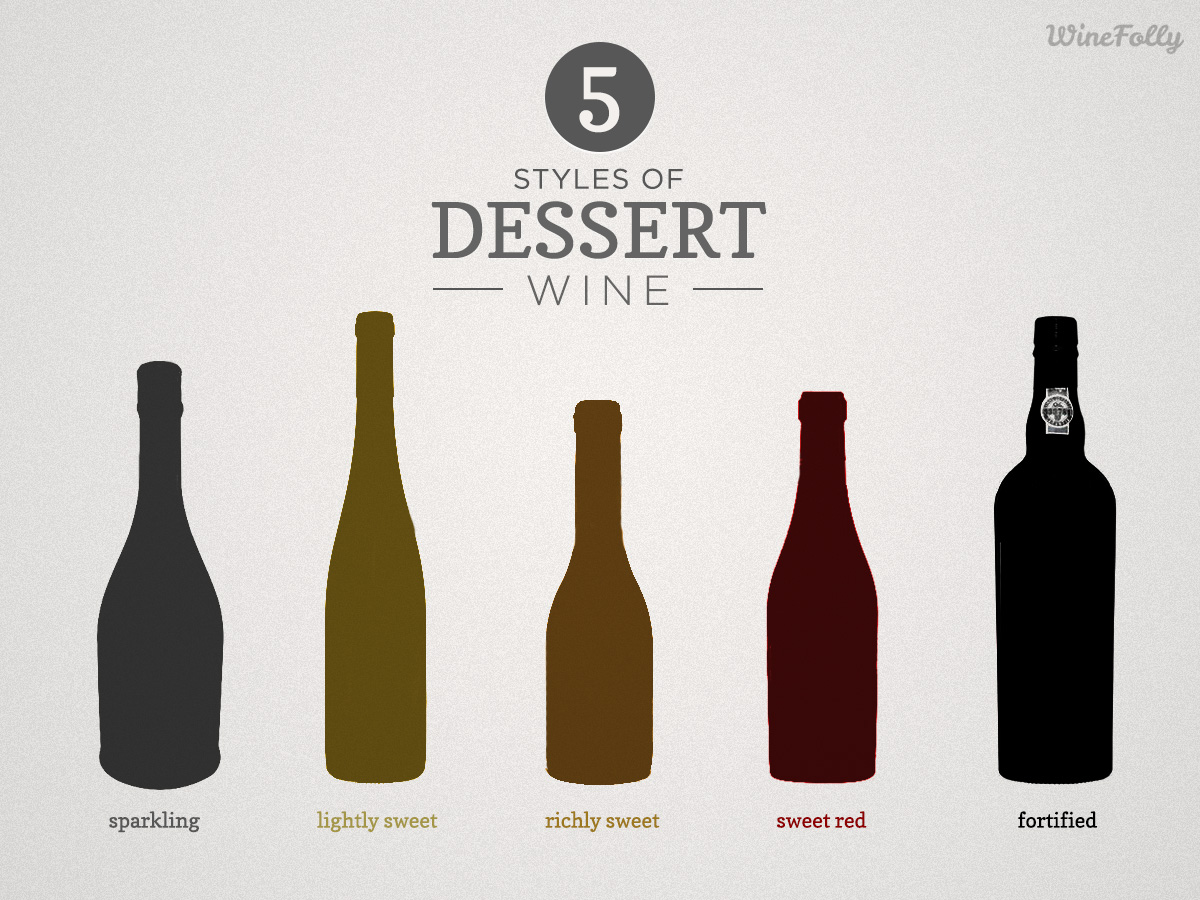
    Most dessert wines can be categorized into 5 styles: Sparkling, Light & Sweet, Rich & Sweet, Sweet Red and Fortified.
    Types of Dessert Wines
    • Sparkling Dessert Wine
    • Lightly Sweet Dessert Wine
    • Richly Sweet Dessert Wine
    • Sweet Red Wine
    • Fortified Wine

    A Guide to Dessert Wines

    Sweet wine comes from extra-sweet grapes! To make a sweet wine, the fermentation is stopped before the yeast converts all grape sugars into alcohol. There are several ways do stop fermentations, including super-cooling the wine or adding brandy to it. The result is a rich wine sweetened with natural grape sugars.

    There are hundreds of different types of dessert wines available in the market, but most fall into 5 main styles. This guide outlines the 5 styles and includes examples of each. Explore all five styles for a deep dive into dessert wines.


    Sparkling Dessert Wine
    Sweet Sparkling Wine Types

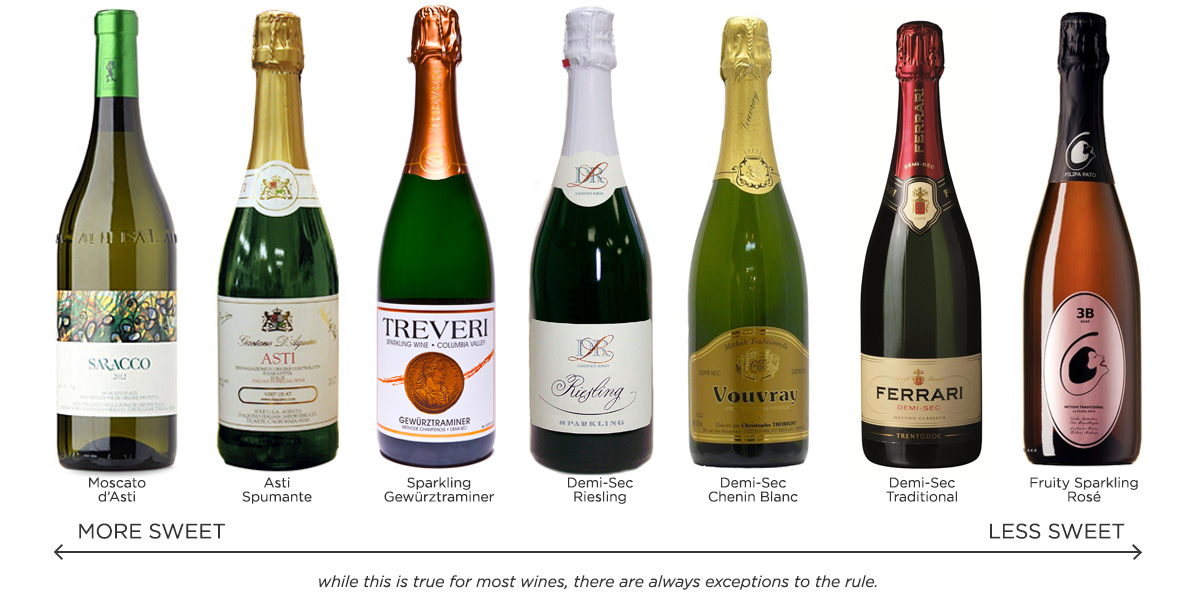
    The carbonation and high acidity in sparkling wine makes it taste less sweet than is actually is! Certain grape varieties smell sweeter than others. This tricks our brain into thinking they taste sweeter too! For instance, a Demi-Sec (aka “Semi Secco”) Moscato tastes sweeter than a Demi-Sec Champagne even though both may have the same amount of sugar.

    When looking for sweet dessert wine Champagnes and other sparklers, keep your eyes peeled for these words on the label:

    • Demi-Sec* (means “off-dry” in French)
    • Amabile (“slightly sweet” in Italian)
    • Semi Secco* (“off-dry” in Italian)
    • Doux (“sweet” in French)
    • Dolce / Dulce (“sweet” in Italian / Spanish)
    • Moelleux (“sweet” for some French wines)

    *not to be confused with “Sec” or “Secco” which is the term for dry in French and Italian.


    Lightly-Sweet Dessert Wine

    Lightly sweet still white wines

    Lightly sweet wines are refreshingly sweet; perfect for a warm afternoon. Many of these sweet wines pair well with spicy foods like Indian or Southeast Asian cuisine. Lightly-sweet wines are best enjoyed as close to the vintage date as possible, save for rare examples, like German Riesling, which age quite well!

    Expect these wines to be exploding with fruit flavors and well suited for fruit-based and vanilla-driven desserts. For instance, consider Gewürztraminer: this wine is known for its lychee and rose petals aromas. A Gewürztraminer pairs excellently with fruit tarts.

    • Gewürztraminer A highly floral wine with moderate alcohol that’s commonly found in Alsace, Alto-Adige (Italy), California and New Zealand.
    • Riesling Available in both dry styles (common in Australia, Alsace and the US) as well as sweeter styles more commonly available from Germany. A wine with high natural acidity which helps cut the sweet taste.
    • Müller-Thurgau A less common variety also from Germany and found in parts of Oregon that has floral aromas with slightly lighter acidity. Classic porch wine and well-loved with sausages.
    • Chenin Blanc Chenin Blanc is commonly made in a sweeter style in the US and it’s also produced in large amounts in South Africa and the Loire Valley of France. Pay attention to labels when buying Chenin Blanc because many South African and French producers create dry versions that taste more like a dry Sauvignon Blanc.
    • Viognier Viognier for the most part, is not sweet. However, as an aromatic grape variety, occasionally you can find it in a fruit-driven style smelling of peaches and perfume. It’s rich and oily on the palate. This style of Viognier is found specifically from Condrieu AOP from the Rhône Valley) in France.

    Richly Sweet Dessert Wine
    Richly Sweet non-fortified dessert wines

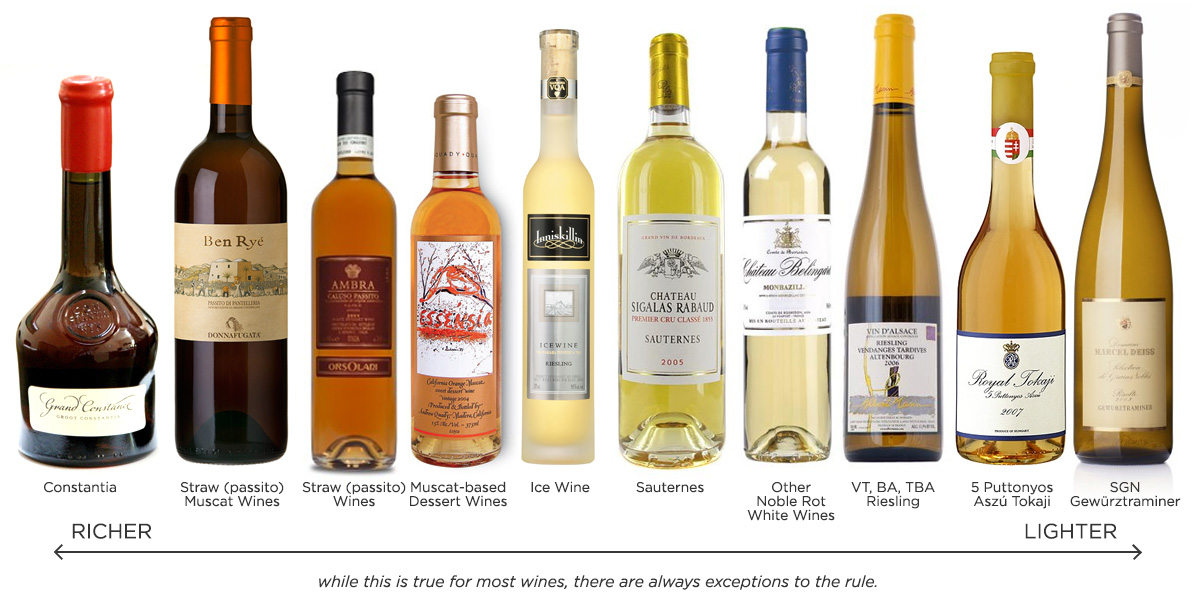
    Richly sweet wines are made with the highest quality grapes in an unfortified style. Many of these wines can age 50+ years because sweetness and acidity preserve their fresh flavor. Some of these wines are historically important including Hungarian Tokaji (‘toe-kye’) which was loved by the Tzars of Russia; South African Constantia which was an obsession of the Dutch and English; and French Sauternes which was loved by Americans in the early 1800’s.

    There are several ways to produce richly sweet dessert wines and you can understand them better by how they’re made.

    Late Harvest

    Late harvest means exactly what it’s called. As grapes hang on the vine longer in the season they become even sweeter and more raisinated, resulting in grapes with concentrated sweetness. In Alsace, late harvest is called “Vendage Tardive,” and in Germany it’s referred to as “Spätlese.”

    Any grape left on the vine can be used for late harvest wines. That being said, it’s popular to find late-harvest wines using Chenin Blanc, Sémillon, and Riesling grapes.

    Noble Rot

    Noble rot is a type of spore called Botrytis cinerea that eats fruits and vegetables. While it sounds (and looks) disgusting, noble rot adds unique flavors of ginger, saffron, and honey to sweet wines. There are many popular types of dessert wines made from noble rot grapes.

    • Sauternais A group of French Appellations in and around Bordeaux including Sauternes, Barsac, Cadillac, and Monbazillac that use Sémillon and Sauvignon Blanc in a rich, golden-hued sweet wine.
    • Tokaji Tokaji Aszú is a wine from Hungary made with Furmint grapes.
    • Auslese, BA, and TBA Riesling (BA = Beerenauslese and TBA = Trockenbeerenauslese) In the German Pradikat system (a sweetness labeling system), Auslese is the first level with a higher proportion of botrytis-affected grapes. Besides being sweeter than “QbA” and “Kabinett” German Rieslings, they also typically feature higher alcohol.

    Straw Mat

    (aka “Passito”) Grapes are laid out on straw mats to raisinate prior to winemaking.

    • Italian Vin Santo is made with Trebbiano and Malvasia grapes and has rich nutty date-like flavors. There are several styles of Vin Santo made throughout Italy.
    • Italian Passito Another straw wine made with several different kinds of grapes, both white and red. For instance, Passito di Pantelleria is Muscat-based and Caluso Passito is made with the rare grape Erbaluce from Piedmont.
    • Greek Straw Wines Greece also produces Vinsanto, which is made with high-acid white Assyrtiko grapes; Samos is a sweet wine made from Muscat grapes; and Commandaria is a sweet wine from Cyprus that dates back to 800 B.C.E.
    • German Strohwein/Austrian Schilfwein Schilfweins are increasingly rare sweet wines made from Muscat and Zweigelt grapes in Austria and Germany.
    • French Vin de Paille Most notably from the Jura region of France, which is adjacent to the alps, these Vin de Paille are produced using Chardonnay and ancient Savagnin grapes.

    Ice Wine (Eiswein)

    True ice wine is extremely rare and expensive for two reasons. One, it only occurs in bizarre years when a vineyard freezes. And two, ice wine must be harvested and pressed while grapes are still frozen!

    The largest ice wine producer in the world is Canada. You can find ice wines in cooler regions like Germany, Austria, and Switzerland.

    Most ice wines are made with Riesling or Vidal grapes, although anything, even Cabernet Franc, can be used to produce an ice wine. You’ll find them to be honeyed and richly sweet, similar to a noble rot wine.


    Sweet Red Wine
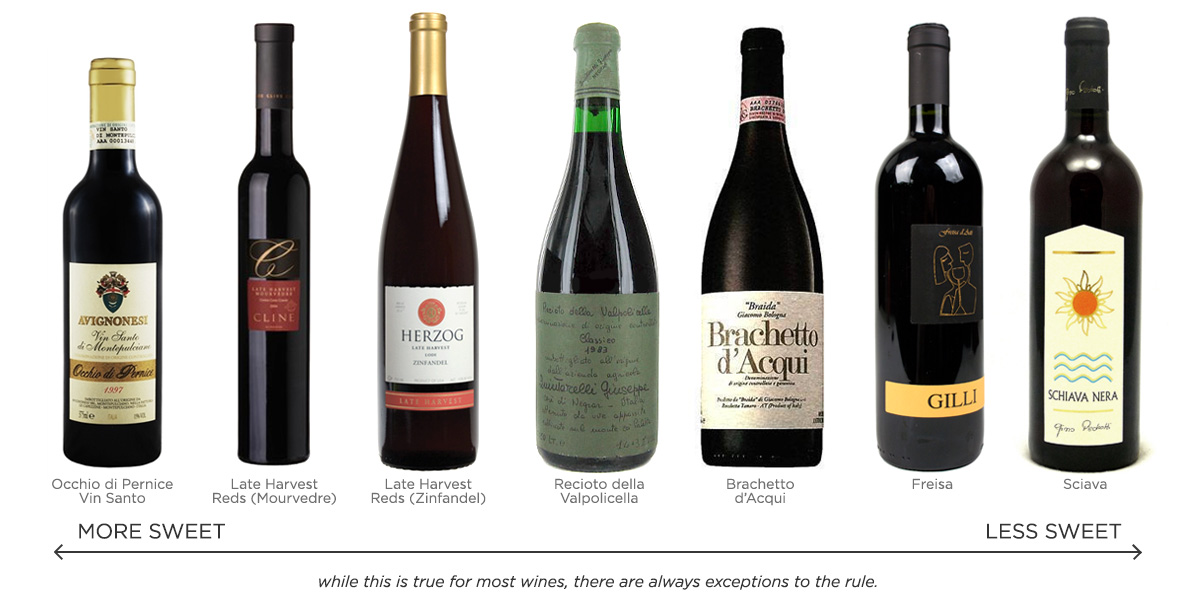
    Sweet Red Wine Types of dessert wines

    Sweet reds are on decline except for cheap commercial production. However, there are still a few well-made historically interesting sweet reds worth trying. The majority of these awesome sweet red wines are from Italy using esoteric grapes.

    • Lambrusco A region producing a refreshing bubbly wine in both dry and sweet styles. Since it’s a sparkling wine, it will have a yeasty undertone along with raspberry and blueberry flavors. Sweet versions are labeled as “Amabile” and “Dulce”.
    • Brachetto d’Acqui A still and bubbly red or rosé wine made with Brachetto grapes from the Piedmont region. Famous for its floral and strawberry aromas as well as its affinity to pairing with cured meats.
    • Schiava A rare variety from Alto-Adige that is nearly wiped off the map. Smelling sweetly of raspberry and cotton candy while being refreshing and only a touch sweet.
    • Freisa Once one of the great red varieties of Piedmont, Freisa is related to Nebbiolo with lighter tannins and floral cherry notes.
    • Recioto della Valpolicella Made in the same painstaking process as Amarone wine, Recioto della Valpolicella is lush, bold and rich.
    • Late-Harvest Red Wines There are many red dessert wines in the US made with grapes such as Zinfandel, Mourvedre, Malbec and Petite Sirah. These wines explode with sweetness and heightened alcohol content.

    Fortified Wine
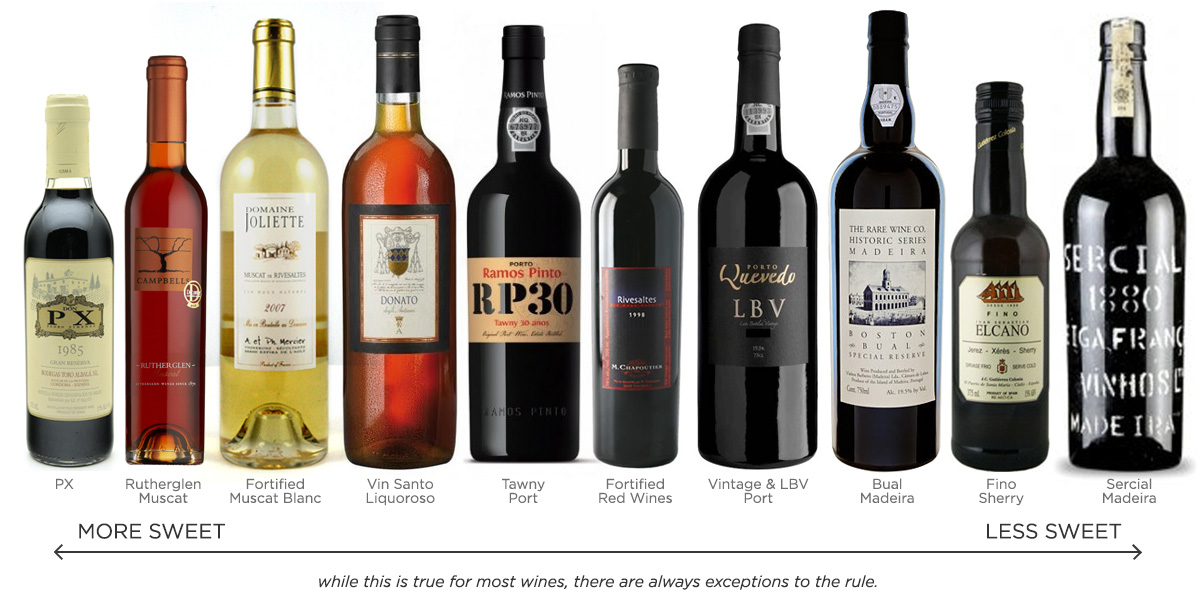
    fortified-dessert-wine-sweetness

    Fortified wines are made when grape brandy is added to a wine and can either be dry or sweet. Most fortified wines are higher in alcohol content (about 17-20% ABV) and have a longer shelf life after they are opened.

    Port

    >Port wine is made in the Northern part of Portugal along the Douro river. These rare sweet red wines are made with dozens of Portuguese traditional grapes including Touriga Nacional, Touriga Franca, and Tinta Roriz. The grapes are collected and fermented together in open tanks where the grapes are stomped daily as the wine begins to ferment.

    At a point during the fermentation, the wine is strained and blended with a clear grape spirit (with nearly 70% ABV) that stops fermentation and fortifies the wine. After this process, there are a series of winemaking steps that lead into the different styles listed below.

    • Ruby & Crusted Port (sweet) This is an introductory style of Port wine that tastes of freshly minted port and is much less sweet than Tawny Port.
    • Vintage & LBV Port (sweet) LBV and Vintage Port are made in the same style but LBV are designed to be enjoyed in their youth (due to the style of cork enclosure) and vintage Ports are meant to be aged about 20-50 years before drinking.
    • Tawny Port (very sweet) The process of aging a Tawny Port happens at the winery in large wooden casks and smaller wooden barrels. The longer the Tawny Port ages, the more nutty and figgy it becomes. A 30-40 year Tawny is the best.
    • Port-Style Wines a.k.a. Vin Doux Naturel (sweet) Port can only be made in Portugal although many producers all over the world make port-style wines such as Zinfandel ‘Port’ or a Pinot Noir ‘Port’. We refer to these wines as vin doux naturel(see below).

    Sherry

    Sherry comes from Andalusia, Spain. The wines are made using Palomino, Pedro Ximénez (a grape, not a person), and Moscatel grapes. Wines are produced using varying amounts of the three grapes and are purposefully oxidized so that they develop nutty aromatics.

    • Fino (dry) The lightest and most dry of all the Sherries with tart and nutty flavors.
    • Manzanilla (dry) A specific style of Fino Sherry from a more specialized region that’s even lighter than Fino.
    • Palo Cortado (dry) A slightly richer style of sherry that is aged longer producing darker color and richer flavor. These wines are typically dry but will have fruit and nut aromas with salinity.
    • Amontillado (mostly dry) An aged sherry that takes on nutty flavors of peanuts and butter.
    • Oloroso (dry) A very aged and dark sherry that has higher alcohol content due to the evaporation of water as the wine ages. This is more like the scotch of Sherry.
    • Cream Sherry (sweet) A sweet style of Sherry made by blending Oloroso with Pedro Ximénez Sherry.
    • Moscatel (sweet) A sweet sherry with fig and date flavors.
    • Pedro Ximénez (PX) (very sweet) A very sweet sherry with brown sugar and figlike flavors.
    Types of Madeira wine - Wine Folly

    Madeira

    Madeira is a wine produced using up to 4 different grapes on the island in the middle of the Atlantic Ocean. Madeira is very unlike other wines because, in order to produce it, the wines undergo a heating and oxidation process – techniques that would traditionally “ruin” a wine.

    The result is a rich fortified wine with walnut-like flavors, salinity and an oiliness on the palate. Because of the 4 different grapes used, Madeira range from dry to sweet making them work well alongside a meal or even as a pre-dinner drink. Learn more about Madeira here.

    • Rainwater & Madeira When the label just says “Madeira” or “Rainwater” assume that it’s a blend of all 4 grapes and somewhere in the middle in terms of sweetness.
    • Sercial (dry) Sercial is the driest and the lightest of all the grapes in Madeira. These wines will have higher acidity and be dry with notes of peaches and apricot. It’s not too uncommon to see Sercial Madeira aged for 100 years.
    • Verdelho (dry) Verdelho has citrus notes and will develop nutty flavors of almond and walnut with time.
    • Bual (sweet) Bual leans on the sweet side with notes of burnt caramel, brown sugar, fig, rootbeer and black walnut. It’s common to find 10 year old ‘medium’ (meaning: medium sweet) Bual Madeira although there are several well aged 50-70 year old Bual as well.
    • Malmsey (sweet) Malmsey Madeiras have orange citrus notes and caramel to their taste along with the oily oxidized nutty flavor.

    Vin Doux Naturel (VDN)

    Vin Doux Naturel are made in a similar style to Port where a base wine is created and finished with neutral grape brandy. The term vin doux naturel comes from France, but this classification could be used to describe a wine from anywhere.

    • Grenache-based VDN Typically from the south of France, such as Maury, Rasteau and Banyuls from Languedoc-Roussillon
    • Muscat-based VDN Muscat de Rivesaltes, Muscat de Frotignan, Muscat de Beaumes de Venise, Ruthernglen Muscat (Australia), Orange Muscat and Vin Santo Liquoroso (Italy).
    • Malvasia-based VDN Mostly from Italy and Sicily such as Malvasia delle Lipari Liquoroso
    • Mavrodaphni From Greece, Mavrodaphni is a sweet red wine with many similarities to Port.
  • Smoothie Ideas

    Smoothie Ideas

    by ASHLEY FEHR

    How to Make a Smoothie: my formula for the thickest, creamiest, most delicious fruit smoothie every time! Tons of options for your liquid, your fruit and your add-ins!

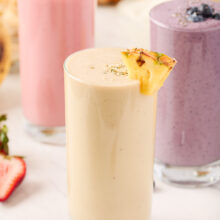
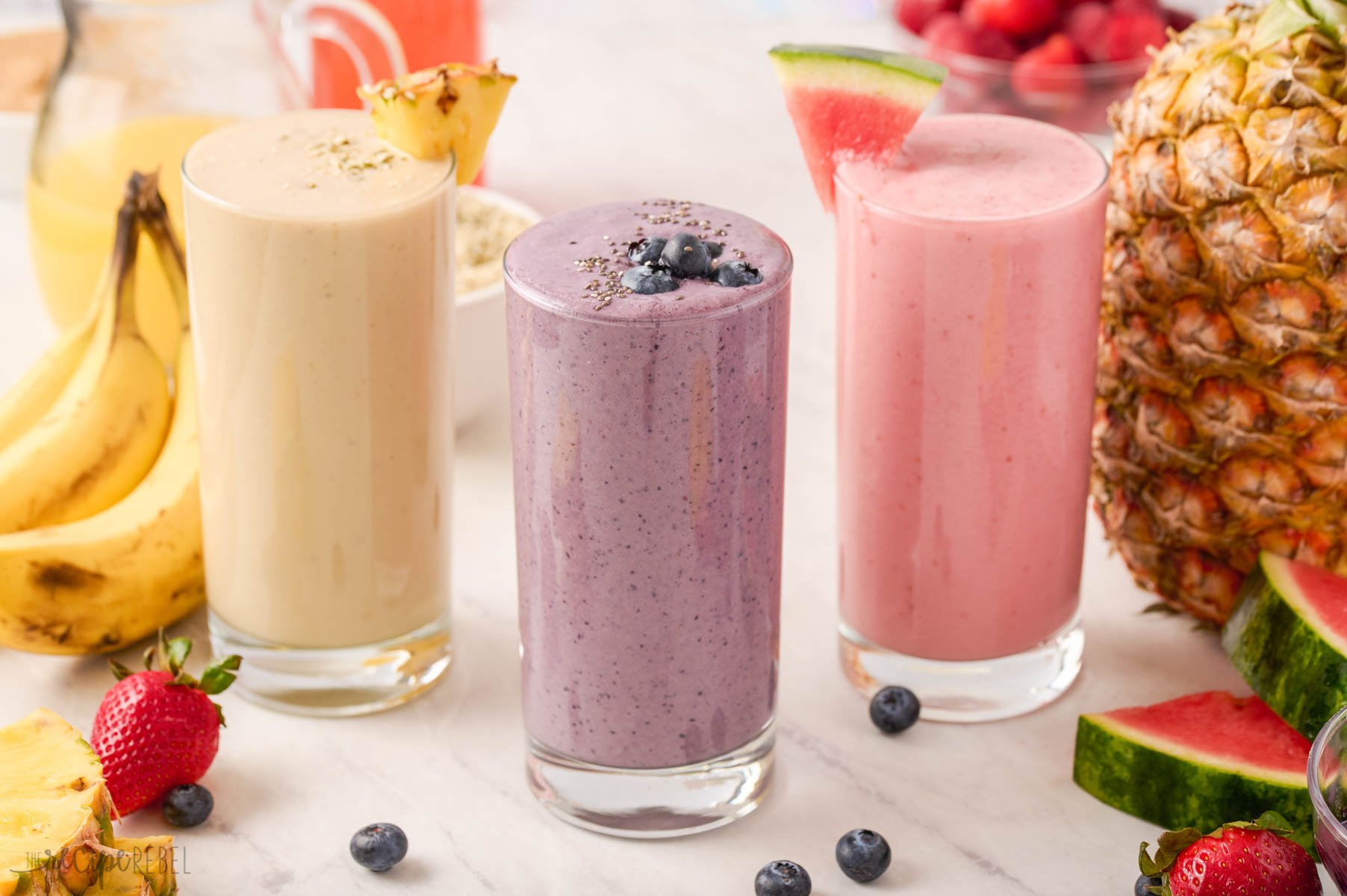
    three different smoothies in glasses with pineapple smoothie in the front

    PREP TIME 5minutes mins

    COOK TIME 0minutes mins

    TOTAL TIME 5minutes mins

    CUISINE American

    COURSE Breakfast, Drinks

    SERVINGS 2

    CALORIES 142cal

    Ingredients

    • ▢¾ cup milk or juice (dairy or non-dairy, high fat or low fat)
    • ▢½ cup plain Greek yogurt (or flavored) about 125 grams
    • ▢1 frozen banana (cut into or frozen in chunks) about 115 grams
    • ▢1 cup frozen berries (strawberries, blueberries, or watermelon, cherries, pineapple, mango — options are endless!)
    • ▢add ins and extras as desired (protein, nut butter, oats and other grains, extracts, etc)

    Instructions

    • Add ingredients to the blender in the order listed (from softest to firmest).
    • Blend until smooth, stopping and stirring as necessary.
    • If your blender is struggling, add a small splash of liquid and stir, then blend again. If you like your smoothie thicker (or colder!), add a handful of ice and blend again.

    Notes

    Add-in Ideas:

    • Nut Butters: give it a boost of nutrition and nutty flavor with a scoop of peanut butter, cashew butter, almond butter, or sunflower seed butter.
    • Seeds: add in a sprinkle of flax seeds, chia seeds, or hemp hearts.
    • Grains: add a scoop of quick oats or even cooked brown rice or quinoa.
    • Protein: make it more filling with a scoop of your favorite protein or collagen powder.
    • Make it creamy: Cream cheese and cottage cheese make an incredibly thick and creamy smoothie.
    • Veggies: a handful of fresh spinach or kale, half an avocado, or even a handful of frozen cauliflower is a great way to add some extra nutrition. Cauliflower and avocado also create an extra smooth and creamy texture!
    • Sweeteners: prefer it sweeter? Try adding a drizzle of honey, agave, pitted Medjool dates, or simple syrup.
    • Extracts: add a dash of vanilla, almond or maple extract to add some extra flavor.
    • Spices and Powders: try Acai powder, maca powder, spirulina, cinnamon, nutmeg, you name it.

    Nutrition Information

    Calories: 142cal | Carbohydrates: 25g | Protein: 9g | Fat: 1g | Saturated Fat: 1g | Polyunsaturated Fat: 1g | Monounsaturated Fat: 1g | Trans Fat: 1g | Cholesterol: 7mg | Sodium: 58mg | Potassium: 525mg | Fiber: 3g | Sugar: 17g | Vitamin A: 222IU | Vitamin C: 47mg | Calcium: 180mg | Iron: 1mg

    More Recipes You’ll Love

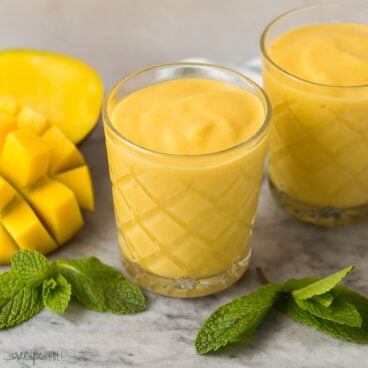
    two mango smoothies in glasses with fresh mango and fresh mint

    DRINKS

    Mango Smoothie


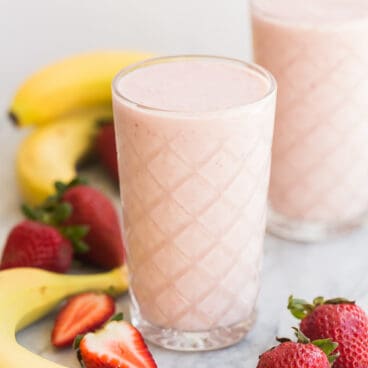
    strawberry banana smoothie in clear glass

    BREAKFAST

    Strawberry Banana Smoothie


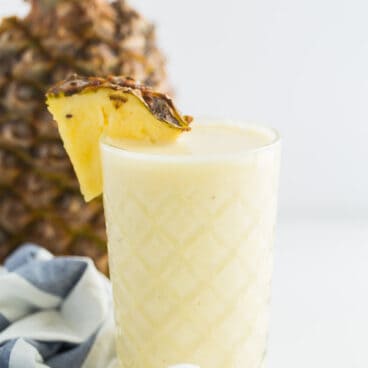
    pineapple smoothie in glass with pineapple slice

    BREAKFAST

    Pineapple Smoothie


    BREAKFAST

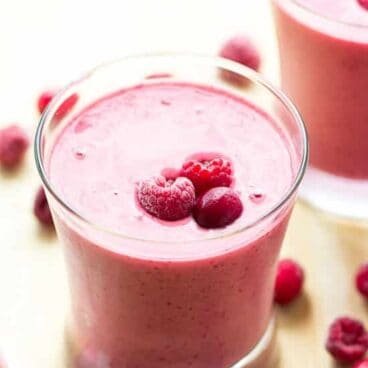
    Cranberry Raspberry Smoothie

  • Creamy Chicken and Rice Bake

    Creamy Chicken and Rice Bake

    Prep Time 5 Min

    Total Time 50 MIN

    Serves 4

    Topped with yummy melted cheese, this easy one-pot chicken dish is a great recipe that is sure to please everyone.

    Ingredients

    Metric Imperial 1 can (284 mL) CAMPBELL’S® Condensed Cream of Mushroom Soup

    1 cup water

    3/4 cup uncooked regular long grain white rice

    1/2 tsp onion powder

    1/4 tsp ground black pepper

    2 cups frozen vegetable

    4 skinless, boneless chicken breast halves

    1 cup shredded Cheddar cheese Email Ingredients List + Nutritional Value

    Directions

    Mix cream of mushroom soup,water,rice,onion powder and black pepper in shallow 2 qt (2 L) baking dish. Stir in vegetables (if frozen,thawed under running water).Top with chicken breasts. Sprinkle chicken with additional pepper,if desired. Cover.

    Bake at 375°F (190°C) until chicken is cooked through and rice is tender – about 45 minutes. Sprinkle cheese over chicken. Remove chicken and stir rice before serving.

    Recipe Tips

    Feel free to experiment with different cheeses and dairy products. Try this recipe with parmesan cheese, cream cheese, or even sour cream.

    This recipe can also be completed using chicken broth, chicken soup, or chicken stock.

    Other potential ingredients include brown rice, garlic powder, and green beans.

    Creamy Chicken and Rice Bake

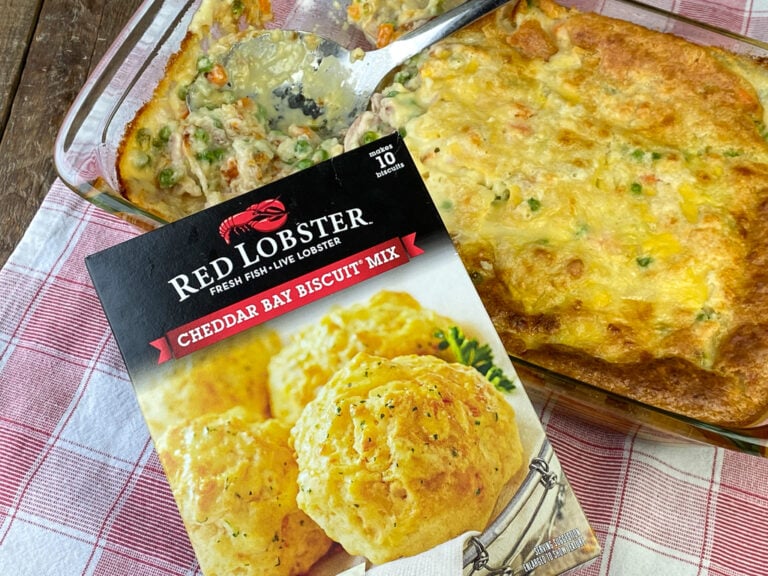
  • Cheddar Bay Biscuit & Chicken Casserole

    Cheddar Bay Biscuit & Chicken Casserole

    An easy dinner idea using rotisserie or other cooked chicken, Cheddar Bay Biscuit Mix, creamy filling, and of course cheese. So delicious.

    CourseMain Course

    CuisineAmerican

    AuthorCatherine’s Plates

    Equipment

    • cutting board & sharp knife
    • large mixing bowl
    • medium mixing bowl
    • 9 x 13 baking dish
    • small dish & pastry brush

    Ingredients

    Biscuit Topping

    • 1 box Red Lobster Cheddar Bay Biscuit Mix
    • 3/4 cup water
    • 1/2 cup shredded cheddar cheese
    • 2 TBS butter, melted

    Mixture

    • 2 cups rotisserie or other cooked chicken
    • 3 (10oz) cans cream of chicken soup
    • 1 cup sour cream
    • 1 cup cheddar cheese, shredded
    • 2 tsp minced garlic
    • 1/4 cup milk
    • 2 TBS melted butter
    • 2 1/2 cups mixed vegetables thawed (peas & carrots, corn, green beans)
    • 1/2 tsp salt
    • 1/2 tsp black pepper
    • 1/2 tsp garlic powder
    • 1/2 tsp onion powder

    Instructions

    • Preheat oven to 425 degrees. Spray a 9 x 13 baking dish with non-stick cooking spray. Set aside.
    • In a large bowl mix together cooked chicken, cream of soups, sour cream, cheddar cheese, milk, garlic, melted butter, thawed vegetables, salt, black pepper, garlic powder, and onion powder.Pour mixture into prepared baking dish.
    • In medium bowl place Red Lobster Cheddar Bay Biscuit mix. Stir in water and 1/2 cup shredded cheddar cheese. Spoon biscuit mix on top of cream mixture and smooth out evenly.
    • Bake in preheated oven for 16-18 minutes until golden brown, biscuits are cooked through, and mixture is heated through.
    • In small dish mix together 4 TBS melted butter & herb seasoning pack 

    https://catherinesplates.com/cheddar-bay-biscuit-chicken-casserole/

  • So Long Saloon’s Raspberry Black Bean Dip

    So Long Saloon’s Raspberry Black Bean Dip

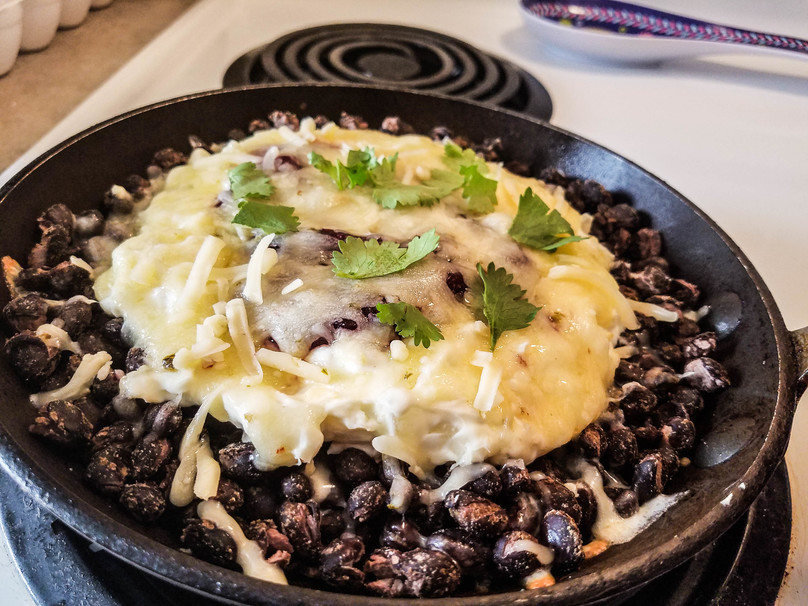
    The following are the quick & easy steps to replicate the delicious raspberry bean dip from So Long Saloon in Manhattan, Kansas.

    In Manhattan, Kansas, there are a lot of interesting places to explore and things to try in town. A must-stop is the So Long Saloon’s to try their raspberry black bean dip. Living so far away, finding this recipe to avoid having to drive 7 hours one way to get it, has been absolutely critical for me. Thanks to Samantha Albers of Kansas State University and their wonderful write-up on Spoon University on July 9th, 2017, we have the eight simple steps for So Long Saloon’s raspberry black bean dip at home.

    Raspberry Black Bean Dip

    • Prep Time:10 mins
    • Cook Time:25 mins
    • Total Time:35 mins
    • Servings:7
    • EASY
    • 1 15-ounce can black beans loosely rinsed and drained
    • Pinch each salt and black pepper
    • 1 tsp cumin
    • 2/3 cup diced red or white onion about half an onion
    • 1 clove garlic minced
    • 5 Tbsp raspberry sauce or jam
    • 1 8-ounce package cream cheese
    • 1/3 cup shredded pepper jack cheese
    • 2 Tbsp olive oil
    • Cilantro for topping optional
    • Chips or crackers for serving
    beans, chili, black beans
    Samantha Albers
    • STEP 1
    • Preheat oven to 400° F (204° C)Samantha Albers
    • STEP 2
    • In a small saucepan, heat beans along with cumin and a pinch each of salt and pepper. Once warmed, taste and adjust seasonings and set aside.coffee, beans, cereal Samantha Albers
    • STEP 3
    • Add olive oil to a 10-12 inch oven-safe skillet over medium heat. Add onions and a pinch of salt. Stir. Cook until soft and fragrant (about five minutes), stirring frequently.vegetable, rice, salt, onion Samantha Albers
    • STEP 4
    • Add garlic and cook for two more minutes. Add to a mixing bowl with cream cheese and stir.vegetable, cereal, rice, risotto, saute Samantha Albers
    • STEP 5
    • Remove the skillet from heat and add cream cheese-onion mixture back to the skillet. Place in the center and make a well (or spread evenly for more distribution).chocolate, cream, cake, sweetSamantha Albers
    • STEP 6
    • Add beans around the outside or on top of cream cheese. Pour raspberry sauce or jam in the center.cake, chocolate, raspberry, cream Samantha Albers
    • STEP 7
    • Sprinkle cheese evenly over the top (optional but recommended). Bake for 12-15 minutes or until warmed and bubbly. Cheese should be melted.cheese, beansSamantha Albers
    • STEP 8
    • Remove from oven and top with additional cheese and cilantro (optional). Serve immediately with chips or crackers.chili, cheese, beefSamantha Albers

    Important Side Notes:

    This recipe serves six to eight people (if you are willing to share).

    You can swirl everything around before serving to combine flavors or let people scoop into it with chips and get a bit of each ingredient.

    Leftovers can keep covered and refrigerated for several days — just reheat in the microwave or oven.

    chicken, oil
    Samantha Albers

    This recipe is a sure and easy way to enjoy one of the most famous dishes made in Aggieville. But for those who have never been there, Manhattan has many great opportunities to enjoy a wonderful atmosphere and vibrant nightlife. So even if you opt to make this at home, I’d still consider visiting for the original version.

  • How to Make a Smoothie

    How to Make a Smoothie

    written by ASHLEY FEHR

    PREP TIME 5MINUTES MINS

    TOTAL TIME 5MINUTES MINS

    SERVINGS 2

    Published on April 19, 2022 / Last updated on November 1, 2022

    How to Make a Smoothie: my formula for the thickest, creamiest, most delicious fruit smoothie every time! Tons of options for your liquid, your fruit and your add-ins!

    three different smoothies in glasses with a variety of fruit in the background

    Whether it’s a Strawberry Smoothie, a Peanut Butter Banana Smoothie, or an Apple Crisp Smoothie, smoothies make a great breakfast, snack, or even dessert.

    But, as simple as they are to make, they’re also surprisingly easy to mess up. They can be too thick, too thin, too sweet, not sweet enough, too chunky, too icy…yeah, you get it.

    Well, I’m going to show you just How to Make a Smoothie! This is my formula for making the perfect one every time with just the right amount of liquid, fruit, yogurt, and add-ins.

    I’ve also included plenty of variation ideas so you can customize it just how you like!

    What Should I Put in My Smoothie?

    The great thing about a fruit smoothie recipe is that the customization opportunities are virtually endless. Here’s a quick run through of what I usually put in my smoothies:

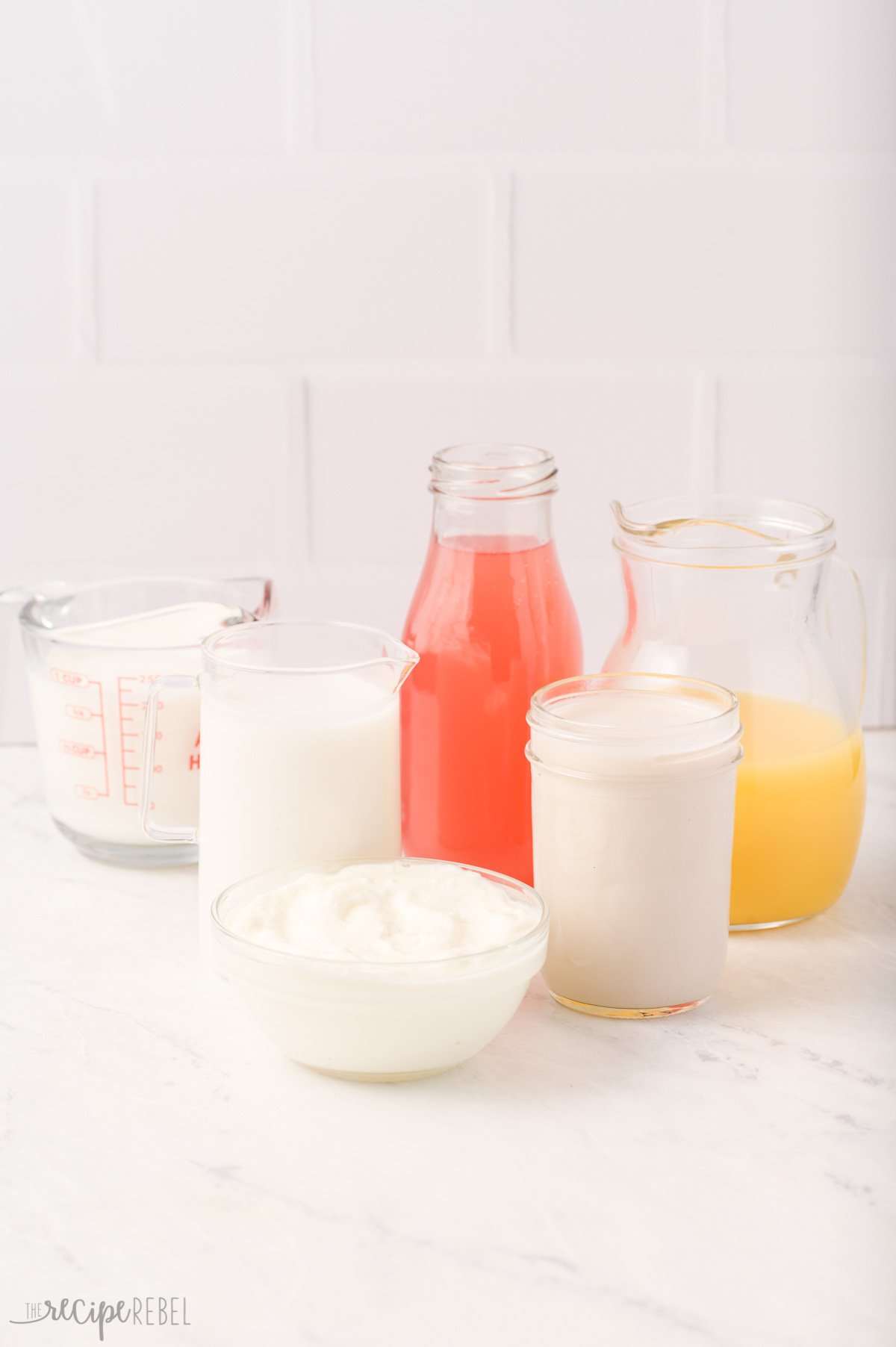
    • Milk or Juice: you can use dairy milk, non-dairy milk, juice, or even coconut water — really any liquid goes! You can even use cold tea.
    • Greek Yogurt: yogurt is a great way to kick the protein up a notch and to make a deliciously thick and creamy texture. Dairy-free, plant-based yogurt works well, too, and you can skip it if you need (it just won’t be as thick).
    • Banana: I love to keep frozen, sliced banana on-hand. The frozen banana makes it extra creamy and acts as a natural sweetener.
    • Berries/Other Fruit: any frozen fruit work great in smoothies! Pineapple, mango, and berries are our favorites. You can even use watermelon like in this refreshing Watermelon Smoothie!
    • Add-Ins: you can customize it with so many different add-ins. Protein powders, nuts or seeds, oats, extracts, sweeteners, even avocado!

    Smoothie liquids:

    We’ve gone over the basics above, but here are a few more fun options:

    • Chocolate milk or chocolate almond milk
    • Cold coffee or tea
    • Pineapple or mango juice
    • Oat, almond, soy or coconut milk.
    • Kombucha or kefir — for some fermented goodness!
    some liquid options for smoothies including juice and milks

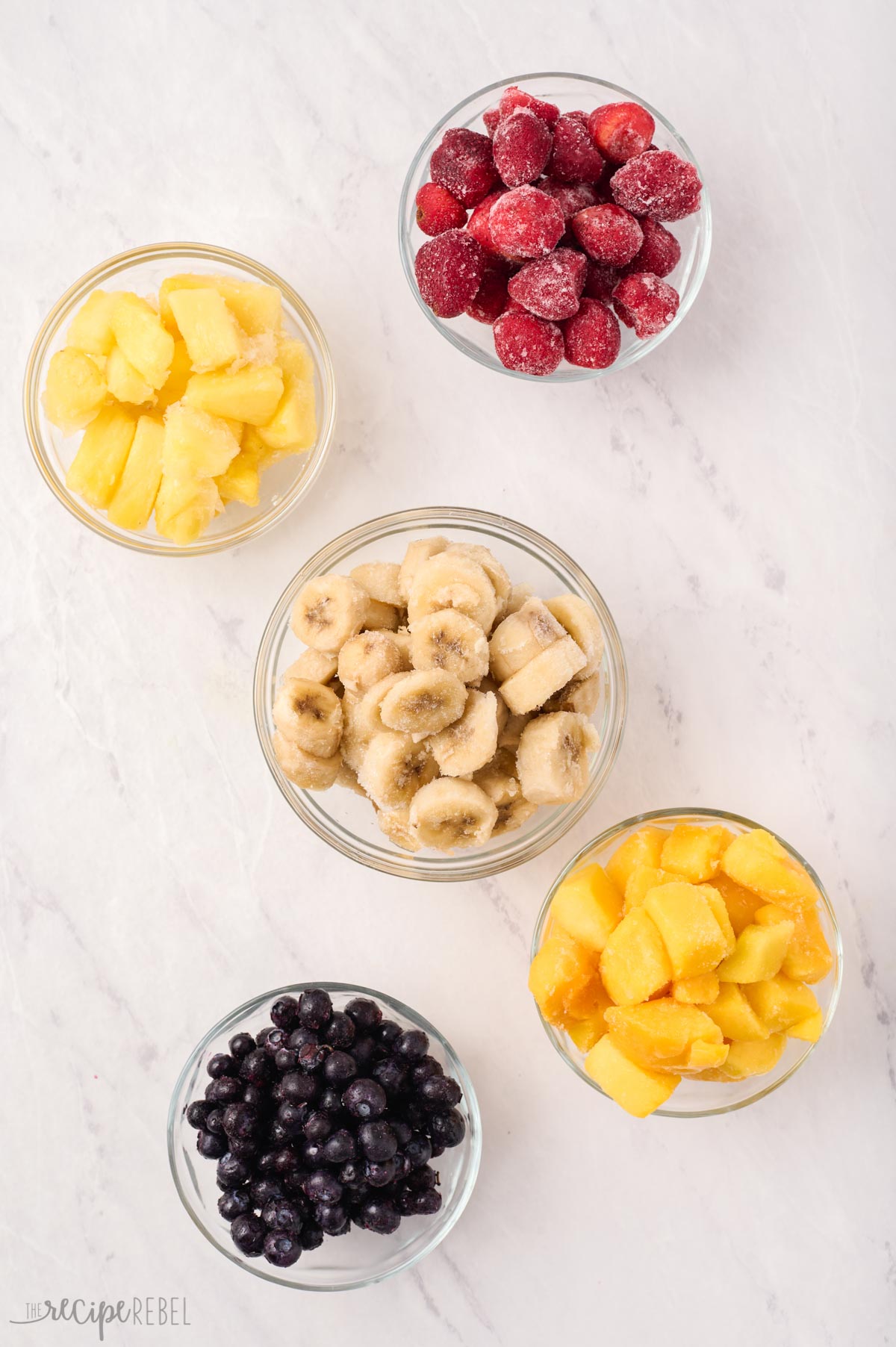
    Smoothie fruits:

    Frozen is best because they create a thick and refreshing smoothie! If you have fresh fruit, try to balance it out with a frozen banana or a cup of ice.

    • I use frozen banana for almost all of my smoothies! It makes them rich and creamy.
    • Apples (not peeled) or oranges (peeled)
    • Berries — they are full of antioxidants and fibre! (this Blueberry Smoothie is one of our favorite berry smoothies!)
    • Pineapple, mango, kiwi — these are fun tropical flavors (they pair well with coconut milk — like in this fun Tropical Smoothie!)
    • Peaches, cherries or other stone fruits (grab a bag of frozen and skip paying the high price when they are out of season)
    frozen fruit options for smoothies in glass bowls

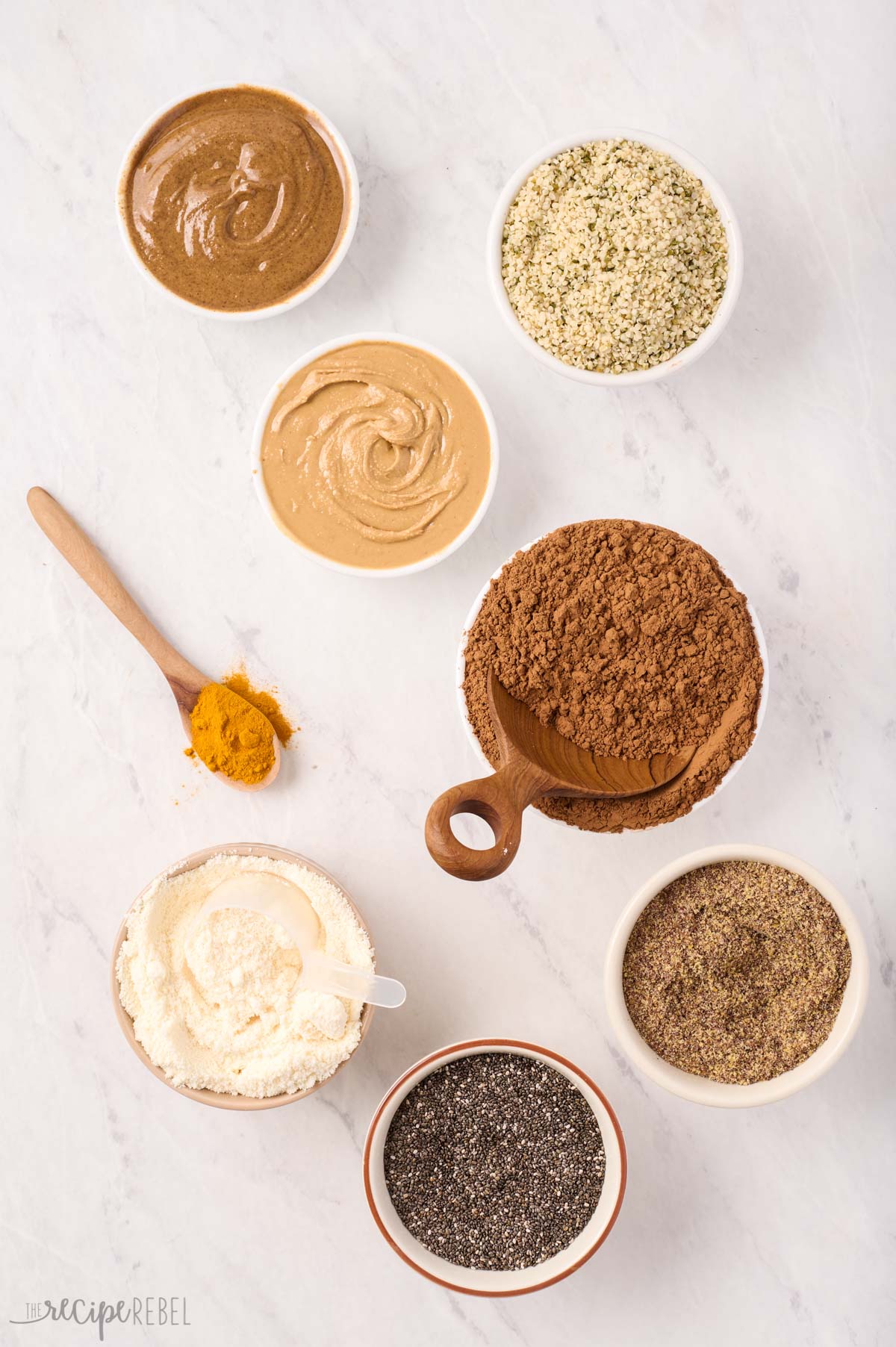
    Smoothie Add-In Ideas

    • Nut Butters: give it a boost of nutrition and nutty flavor with a scoop of peanut butter, cashew butter, almond butter, or sunflower seed butter.
    • Seeds: add in a sprinkle of flax seeds, chia seeds, or hemp hearts.
    • Grains: add a scoop of quick oats or even cooked brown rice or quinoa.
    • Protein: make it more filling with a scoop of your favorite protein or collagen powder.
    • Make it creamy: Cream cheese and cottage cheese make an incredibly thick and creamy smoothie.
    • Veggies: a handful of fresh spinach or kale, half an avocado, or even a handful of frozen cauliflower is a great way to add some extra nutrition. Cauliflower and avocado also create an extra smooth and creamy texture!
    • Sweeteners: prefer it sweeter? Try adding a drizzle of honey, agave, pitted Medjool dates, or simple syrup.
    • Extracts: add a dash of vanilla, almond or maple extract to add some extra flavor.
    • Spices and Powders: try Acai powder, maca powder, spirulina, cinnamon, nutmeg, you name it.
    nut butters seeds grains and powders options for smoothie mix ins

    How to Make a Smoothie

    This healthy snack comes together in a quick 5 minutes! Here’s how:

    1. Add ingredients to the blender: Add all of your ingredients to a high powered blender in order from softest to firmest.
    2. Blend: Blend until smooth, stopping to stir if needed.
    3. Adjust as needed: Check the flavor and texture, adjust as needed, then serve right away!
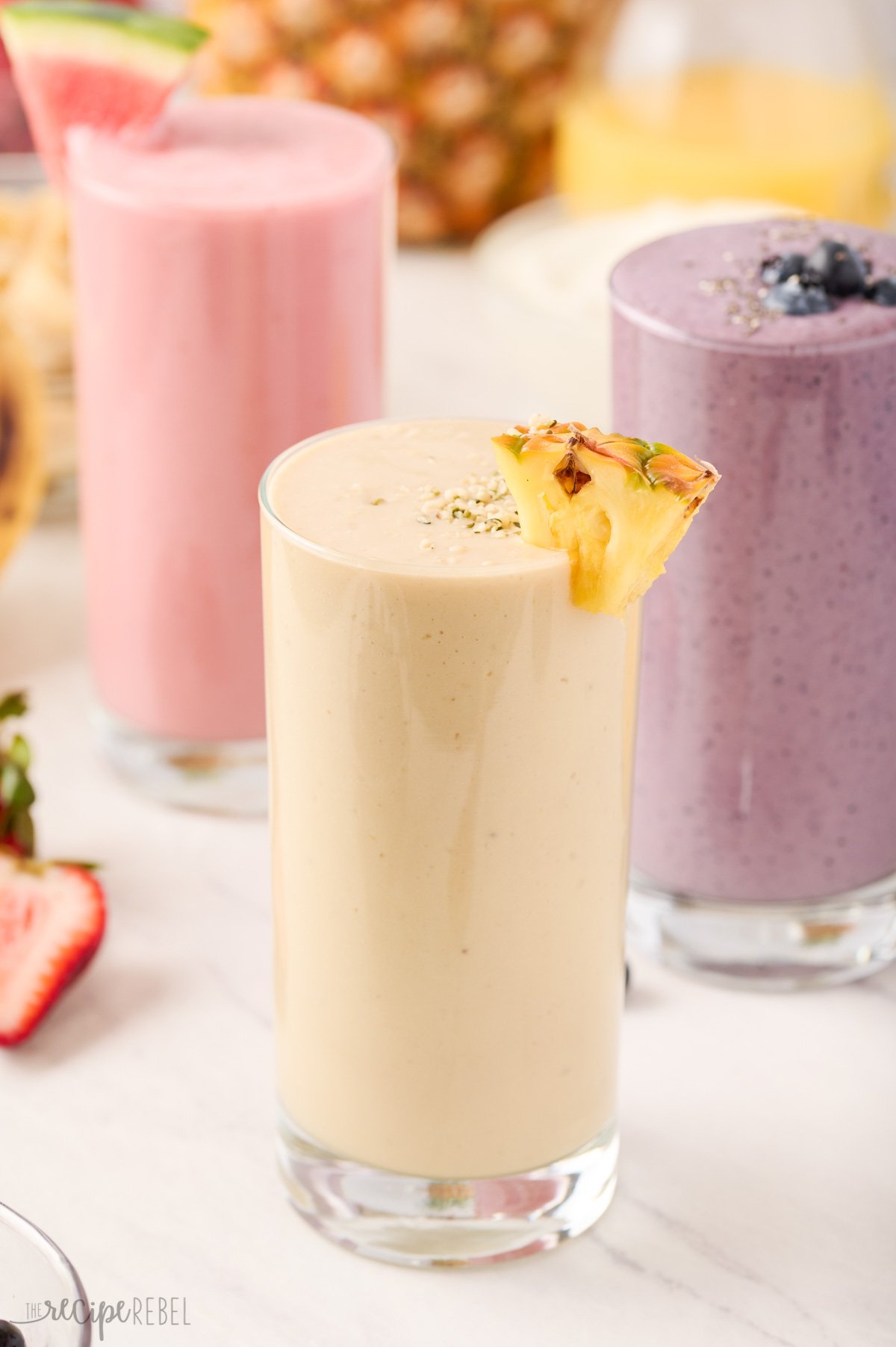
    three different smoothies in glasses with pineapple smoothie in the front

    Healthy Fruit Smoothie FAQs

    What fruits are best for smoothies?

    You can pretty much use any fruit you like in a smoothie. Try strawberries, blueberries, raspberries, banana, mango, peaches, cherries, pineapple, watermelon, you name it. For the best results, use frozen fruit. It makes for a creamier smoothie!

    Are smoothies best with milk or water?

    I definitely recommend using milk for your smoothie. It creates a creamier texture and better flavor. Dairy milk, almond milk, and coconut milk are all great options.

    Do you put ice in a smoothie?

    If you’re using frozen fruit, no. It isn’t necessary to use ice in a smoothie. Frozen fruit is the best way to get a cold and creamy smoothie without watering it down. If all you have is fresh fruit, or you like your smoothies super cold, it is fine to add ice.